Key Takeaways
- “Straight” means quality you can trust. Kentucky straight bourbon whiskey must be aged at least two years in new charred oak barrels, with absolutely no added coloring, flavoring, or blending shortcuts. That label is your guarantee of an honest, well-crafted spirit.
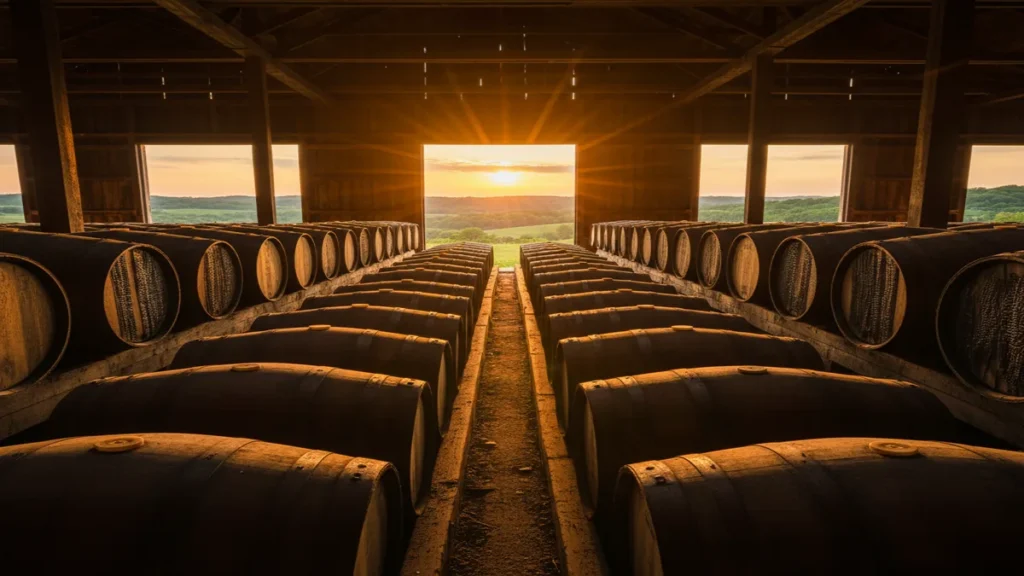
- Kentucky’s terroir gives it an edge. Limestone-filtered water, extreme seasonal temperature swings, and generations of cooperage expertise make Kentucky the ideal place to produce straight bourbon. The state accounts for roughly 95% of the world’s bourbon supply.
- Not all bourbon earns the “straight” designation. Regular bourbon has fewer aging requirements and can include additives. When a bottle says “Kentucky Straight Bourbon Whiskey,” it has met a stricter set of federal standards that separate craft from compromise.
What Does “Kentucky Straight Bourbon Whiskey” Actually Mean?
Walk into any well-stocked liquor store and you will see those four words on dozens of labels: Kentucky Straight Bourbon Whiskey. It sounds impressive, but what does it actually promise? The answer lies in a set of strict federal regulations that govern how the spirit is made, aged, and labeled. Each word in that phrase carries legal weight, and together they tell you more about what is in the bottle than almost any other label in the spirits world.
Understanding these rules does not just make you a more knowledgeable drinker. It helps you choose better bottles, appreciate what separates a premium pour from a mass-market blend, and recognize why brands like Mary Dowling Whiskey Co. proudly display those words on every expression they release.
The Legal Definition: Breaking Down Each Word
The term “Kentucky Straight Bourbon Whiskey” is not a marketing phrase. It is a legally protected designation defined by the U.S. Alcohol and Tobacco Tax and Trade Bureau (TTB) and the Code of Federal Regulations. Here is what each component requires:
Bourbon
To be called bourbon, a whiskey must meet these baseline requirements:
- Produced in the United States
- Made from a grain mixture (mash bill) that is at least 51% corn
- Distilled to no more than 160 proof (80% ABV)
- Entered into the barrel at no more than 125 proof (62.5% ABV)
- Aged in new, charred oak barrels
- Bottled at a minimum of 80 proof (40% ABV)
Straight
The word “straight” adds critical quality standards on top of the bourbon baseline:
- Minimum two years of aging in new charred oak barrels
- No added coloring or flavoring of any kind
- If aged less than four years, the age must be stated on the label
- If it is a blend of straight bourbons, all components must be straight bourbon from the same state
This is the detail that matters most. The “straight” designation is your assurance that what you are drinking is pure barrel-aged bourbon with zero shortcuts. No caramel coloring to fake a richer hue. No vanilla extract to mask a thin profile. Just grain, water, yeast, and time in oak.
Kentucky
Bourbon can legally be made anywhere in the United States. However, to carry the “Kentucky” designation, it must be both distilled and aged in the Commonwealth of Kentucky. This is not a mere geographic label. Kentucky offers a combination of natural advantages that are nearly impossible to replicate:
- Limestone-filtered water: Kentucky sits atop a massive limestone shelf that naturally filters iron from the water supply while adding calcium and magnesium. Iron ruins whiskey. Calcium enhances fermentation. The water here is tailor-made for bourbon production.
- Temperature extremes: Kentucky summers push warehouse temperatures above 100°F, while winters drop well below freezing. This forces the bourbon in and out of the wood, accelerating the extraction of vanillin, tannins, and caramel compounds from the charred oak. The result is deeper color and more complex flavor in less time.
- Cooperage heritage: Kentucky is home to world-class cooperages like Kelvin Cooperage, which craft the barrels that define bourbon’s character. The concentration of barrel-making expertise in the region ensures consistent quality.
Straight Bourbon vs. Regular Bourbon: What Is the Difference?
The distinction matters more than most people realize. Here is a side-by-side comparison:
| Requirement | Bourbon | Straight Bourbon |
|---|---|---|
| Minimum corn in mash bill | 51% | 51% |
| New charred oak barrels | Yes | Yes |
| Minimum aging | No minimum | 2 years |
| Added coloring/flavoring | Permitted (up to 2.5%) | Not permitted |
| Age statement required | No | Yes, if under 4 years |
| Blending restrictions | Can blend with other spirits | Can only blend with other straight bourbons from same state |
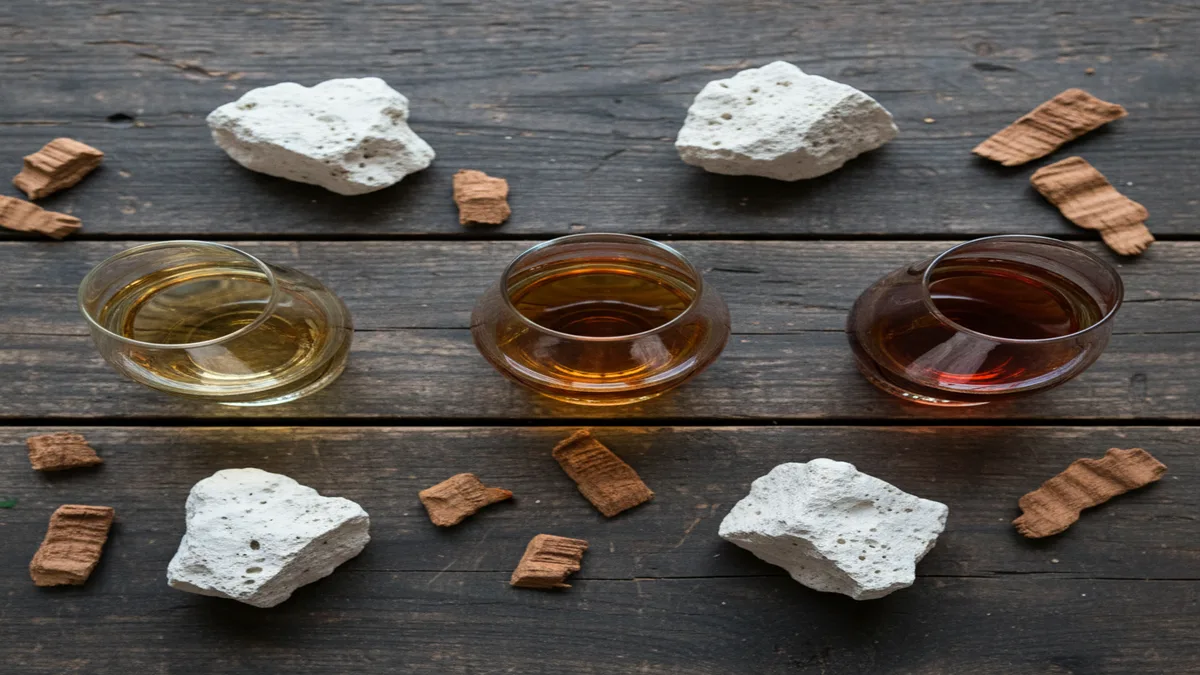
The takeaway is straightforward: a bottle labeled “straight” has been held to a higher standard at every stage. The minimum two-year aging requirement ensures the spirit has had enough time to develop real complexity from the wood. The ban on additives means the flavor you taste is entirely the product of the grain, the barrel, and the distiller’s skill.
Why Kentucky Straight Bourbon Whiskey Commands Respect
Kentucky straight bourbon is not just a category. It is a standard of excellence that has been earned over more than two centuries of distilling tradition. When you see those words on a label, you know the distillery has committed to the most demanding production requirements in American whiskey.
The designation also connects a bottle to a specific place and its history. Kentucky’s bourbon heritage stretches back to the late 1700s, when settlers discovered that the region’s natural resources produced an exceptionally smooth and flavorful spirit. Pioneers like Mary Dowling, who ran a distillery during one of the most challenging periods in American history, helped preserve that tradition through sheer determination and craft.
The Role of Aging in Straight Bourbon
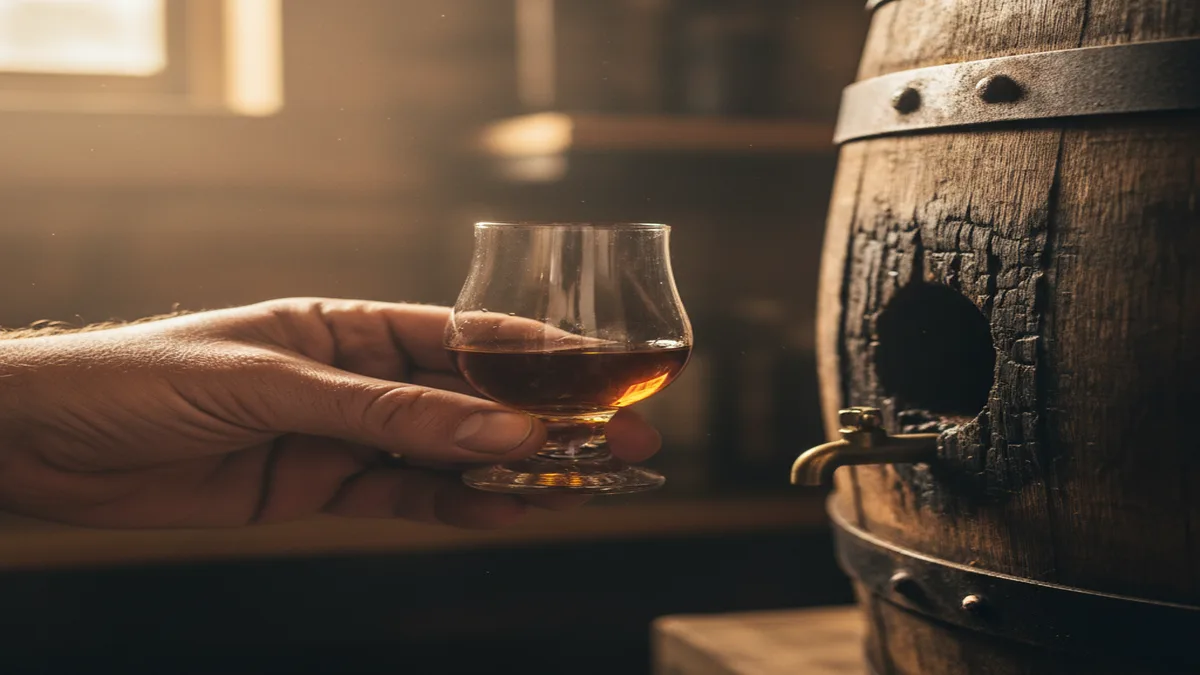
The two-year minimum is a floor, not a ceiling. Most quality Kentucky straight bourbons are aged significantly longer. During those years in the barrel, dozens of chemical reactions transform clear distillate into the rich, amber whiskey drinkers know and love:
- Color: Bourbon gets 100% of its color from the barrel. The charred interior of new oak acts like a filter, infusing the spirit with deep gold, amber, and mahogany tones.
- Vanilla and caramel: Heat breaks down lignin in the oak, releasing vanillin. Hemicellulose in the wood caramelizes, producing the sweet, butterscotch notes that define bourbon’s flavor profile.
- Tannins and spice: Oak tannins add structure, complexity, and a dry finish. Depending on the char level and barrel toast, these can range from subtle cinnamon to bold baking spice.
- The angel’s share: Each year, roughly 2-4% of the bourbon evaporates through the barrel, concentrating the remaining liquid and intensifying its flavor.
This is why the “straight” designation matters. Two years of barrel contact is the minimum threshold for developing the flavor complexity that bourbon drinkers expect. Anything less and the spirit simply has not had enough conversation with the wood.
Mary Dowling: A Case Study in Kentucky Straight Bourbon Craftsmanship
Mary Dowling Whiskey Co. exemplifies what Kentucky straight bourbon can be when tradition meets innovation. Every bottle in the Mary Dowling collection carries the Kentucky Straight Bourbon Whiskey designation, and each expression pushes the craft forward in a different direction:
Winter Wheat Bourbon
A wheated bourbon finished in toasted barrels. The use of winter wheat as the secondary grain (instead of rye) produces a softer, sweeter mash bill. The toasted barrel finish, developed in partnership with Kelvin Cooperage, adds layers of honey, vanilla, and baked fruit that complement the wheat’s gentle character.
Tequila Barrel Finished Bourbon
A high-rye Kentucky straight bourbon finished in reposado tequila barrels. This is where the “straight” designation really earns its keep. The base bourbon has all the depth and integrity that comes from proper aging in new charred oak. The tequila barrel finish adds bright agave, citrus, and herbal notes without masking the bourbon’s core identity.
Double Oak Cask Strength
Aged in two separate sets of Kelvin Cooperage barrels, this expression is bottled at cask strength with no water added, no filtering, and no compromises. The double barrel process extracts twice the oak influence, producing an exceptionally rich, full-bodied bourbon.
Each of these expressions starts with the same foundation: Kentucky straight bourbon made with pure limestone-filtered water, quality grain, and patient aging. The finishing techniques build on that foundation without undermining it. That is the beauty of the “straight” standard. It ensures the base spirit is worthy of the label before anything else happens to it.
How to Read a Straight Bourbon Label
Now that you understand the regulations, here is how to decode what a label is really telling you:
- “Kentucky Straight Bourbon Whiskey”: Made and aged in Kentucky. Minimum 2 years in new charred oak. No additives.
- “Straight Bourbon Whiskey”: Same rules, but could be made in any U.S. state.
- “Bourbon Whiskey”: Meets bourbon requirements but may be aged less than 2 years and may contain up to 2.5% added flavoring.
- “Blended Bourbon Whiskey”: At least 51% straight bourbon, blended with other spirits or neutral grain spirits. Different category entirely.
- An age statement (e.g., “Aged 4 Years”): For straight bourbon, this refers to the youngest whiskey in the bottle. If no age is stated on a straight bourbon, it is at least 4 years old.
- “Bottled in Bond”: An even stricter designation. Must be straight bourbon aged at least 4 years, produced in a single distilling season, by one distiller, at one distillery, and bottled at exactly 100 proof.
Common Questions About Straight Bourbon
Does bourbon have to be made in Kentucky to be called bourbon?
No. Bourbon can be legally produced anywhere in the United States. However, to say “Kentucky Bourbon” or “Kentucky Straight Bourbon Whiskey” on the label, it must be both distilled and aged in Kentucky. The vast majority of bourbon, approximately 95%, does come from Kentucky due to the state’s natural advantages and deep distilling heritage.
What is the difference between straight bourbon and single barrel bourbon?
“Straight” refers to how the bourbon was made and aged (minimum 2 years, no additives). “Single barrel” means the bourbon comes from one individual barrel rather than a blend of multiple barrels. A bourbon can be both straight and single barrel. Mary Dowling offers a Single Barrel Program where each cask strength bottle comes from a hand-selected barrel.
Why does straight bourbon taste different from regular bourbon?
The two-year minimum aging requirement gives straight bourbon more time to extract flavor compounds from the oak. The ban on additives means every note you taste, from vanilla and caramel to cinnamon and dried fruit, developed naturally through the interaction between spirit and wood. Regular bourbon may supplement these flavors with small amounts of coloring or flavoring agents.
What is the best way to drink Kentucky straight bourbon?
There is no wrong way, but many enthusiasts recommend starting neat or with a few drops of water to open up the aromatics. A classic Old Fashioned or Manhattan also showcases straight bourbon’s depth beautifully. The key is choosing a quality Kentucky straight bourbon as your base, which ensures the cocktail’s flavor is built on genuine barrel character rather than additives.
How long is Kentucky straight bourbon aged?
The legal minimum is two years, but most quality Kentucky straight bourbons spend four to eight years in the barrel. Some premium expressions age even longer. The sweet spot depends on the distiller’s style, the barrel’s char level, and the warehouse conditions. If a straight bourbon bottle does not carry an age statement, it is guaranteed to be at least four years old.
The Bottom Line
“Kentucky Straight Bourbon Whiskey” is the gold standard of American whiskey. Every word on that label represents a commitment: to quality ingredients, patient aging, honest production, and the unmatched terroir of Kentucky. When you reach for a bottle that carries this designation, you are choosing a spirit that has earned its place through time, tradition, and an unwillingness to cut corners.
Mary Dowling Whiskey Co. embodies that standard. Named for the legendary woman who defied Prohibition to keep Kentucky’s bourbon heritage alive, every expression in the lineup is a Kentucky Straight Bourbon Whiskey crafted with the same uncompromising spirit. Explore the collection and taste what happens when history, craft, and Kentucky’s natural bounty come together in a glass.

Justin Pakdaman is the Marketing Director for Mary Dowling Whiskey Co., where he leads brand storytelling, digital strategy, and consumer engagement. Justin has years of experience building premium spirits brands.