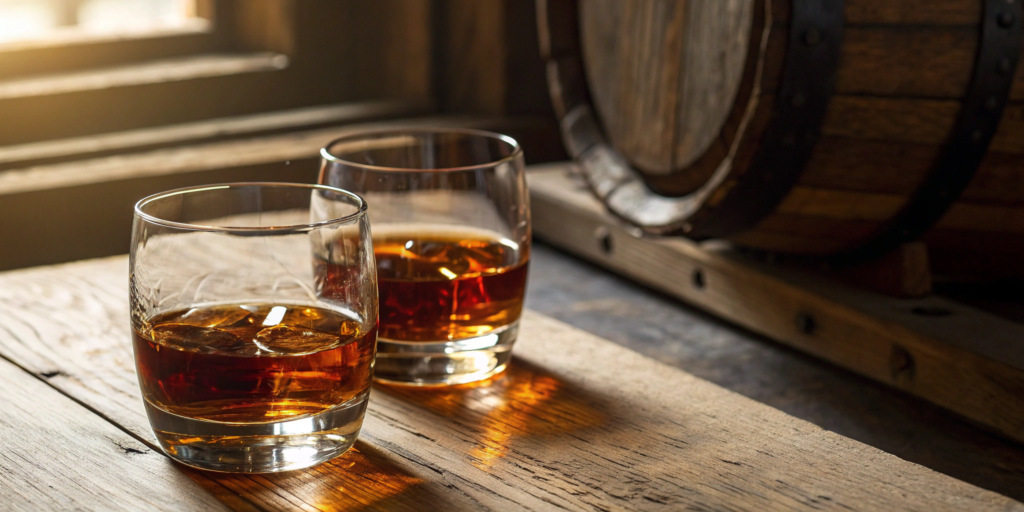
A great bourbon tells a story, and the most compelling stories are often the most authentic and unfiltered. The same is true for the spirit itself. While many whiskeys are proofed down before bottling, some are presented in their purest form. This is where the conversation about `cask strength vs barrel proof` begins, as both terms refer to a whiskey that is unapologetically itself, straight from the barrel. Much like our namesake, Mary Dowling, these expressions are born of resilience and defy convention. Here, we’ll explore what these powerful whiskeys are all about and how to best appreciate a spirit that’s as bold and honest as the story behind it.
## Key Takeaways
* **[Decode the Label](https://marydowling.com/how-to-drink-cask-strength-bourbon/)**: Remember that “cask strength” and “barrel proof” mean the same thing: a pure, undiluted whiskey. “Full proof” is different, as it’s proofed down to its original barrel-entry strength. Knowing this distinction helps you confidently choose the exact tasting experience you want.
* **Chase the Flavor, Not Just the Heat**: A higher proof isn’t just about strength; it’s about flavor concentration. Cask strength whiskeys deliver a richer, more complex profile because none of the nuanced notes of caramel, oak, and spice have been watered down.
* **You Control the Experience**: Always taste high-proof whiskey neat first to appreciate its full power. Then, take control by adding a few drops of water to soften the alcohol and open up new layers of flavor, customizing each sip to your personal preference.
## What Are Cask Strength and Barrel Proof Whiskeys?
If you’ve ever stood in a whiskey aisle wondering about the difference between “cask strength” and “barrel proof,” let me clear it up for you: they mean the exact same thing. Both terms tell you that the whiskey in the bottle is a pure, uncut expression of what came directly out of the aging barrel. There’s no added water to dilute it, which is a common practice for most standard whiskeys.
Think of it as the most authentic version of a whiskey you can get. It’s bottled at its natural strength, preserving the full intensity and complexity that developed during its time in the cask. This approach honors the spirit’s true character, offering a bold and unfiltered tasting experience. For those of us who appreciate the intricate craft behind a great bourbon, tasting a cask strength expression is like hearing a story straight from the source, with nothing lost in translation. It’s a chance to connect with the whiskey in its most powerful and honest form, just as the distiller intended.
### A Quick Look at the Bottling Process
Most whiskeys go through a standard process: they mature in an oak barrel, and once the distiller decides they’re ready, the liquid is dumped and often blended with other barrels. Before bottling, most are proofed down—meaning purified water is added to lower the alcohol by volume (ABV) to a consistent, more approachable level, typically between 80 and 100 proof. This isn’t the case with cask strength whiskeys. Here, the distiller skips the dilution step entirely. The whiskey is simply filtered to remove barrel char and then bottled, capturing the spirit’s natural proof, which can vary significantly from one barrel to the next.
### Why Proof Matters to Whiskey Lovers
So, why do whiskey fans get so excited about these high-proof bottles? It all comes down to flavor. Because cask strength whiskey isn’t watered down, it delivers an incredibly concentrated and rich taste. All the nuanced notes of caramel, vanilla, spice, and oak are presented in their most potent form. These whiskeys can be quite strong, sometimes reaching 130 proof or more, but that intensity carries a depth of flavor you won’t find in standard bottlings. It also gives you control over the experience; you can sip it neat to appreciate its full power or add a few drops of water yourself to see how the flavors open up.
### Debunking Common High-Proof Myths
One of the most persistent myths is that there’s a subtle, technical difference between “cask strength” and “barrel proof.” In the United States, the terms are used interchangeably to mean the whiskey has not been diluted after aging. Another common misconception is that cask strength whiskey always comes from a single barrel. While single barrel offerings are often cask strength, a distiller can also create a cask strength whiskey by [blending the contents](https://www.tastingtable.com/1459758/difference-full-proof-barrel-cask-strength-bourbon/) of multiple barrels. The key rule is that no water is added to that final blend. This process allows distillers to create a consistent, yet incredibly robust, flavor profile that represents the best of a particular batch.
## Cask Strength vs. Barrel Proof vs. Full Proof
When you’re exploring the world of premium whiskey, you’ll quickly run into terms like “cask strength,” “barrel proof,” and “full proof” on the labels. While they all signal a more intense, flavorful experience, they don’t all mean the same thing. Understanding these distinctions is your key to picking the perfect bottle and knowing exactly what you’re about to pour. Let’s break down what each term really means for the whiskey in your glass.
### Defining the Key Differences
Think of “cask strength” and “barrel proof” as two names for the same idea. Both terms mean the whiskey is bottled at the exact alcoholic strength it was when it finished aging in the barrel. Absolutely no water is added after maturation to dilute it. This is whiskey in its purest, most potent form, straight from the cask.
“Full proof,” on the other hand, is a bit different. This term refers to the proof of the whiskey when it *first entered* the barrel to begin aging. The [difference between full proof and barrel proof](https://whiskyadvocate.com/the-difference-between-full-proof-and-barrel-proof) is a crucial one, as it tells you about two different moments in the whiskey’s life cycle: the beginning and the end of its time in the barrel.
### How Production and Bottling Methods Differ
The production process for cask strength and barrel proof whiskeys is straightforward: the spirit ages in the barrel, and once it’s deemed ready, it’s bottled. The proof can fluctuate during aging due to evaporation (the “angel’s share”), so the final proof is whatever nature decided.
For a full proof whiskey, there’s an extra step. After the whiskey is done aging, it’s proofed down with water before bottling. However, it’s only diluted enough to match the proof it had when it originally went into the barrel. So, if a whiskey entered the barrel at 115 proof and came out at 125 proof, the distiller would [add water](https://www.tastingtable.com/1459758/difference-full-proof-barrel-cask-strength-bourbon/) to bring it back down to 115 proof for bottling.
### Why These Terms Aren’t Legally Defined
Here’s where things can get a little tricky. None of these terms—cask strength, barrel proof, or full proof—are legally regulated. This means distilleries have some leeway in how they use them. While the whiskey community generally agrees on the definitions we’ve covered, a lack of legal enforcement allows for interpretation.
This is especially true for “full proof,” which can sometimes be used more as a marketing term than a strict production guideline. Because of this ambiguity, it’s always a good idea to be an informed consumer. While most distillers use the terms in good faith, knowing they aren’t set in stone helps you ask the right questions and better understand what you’re buying.
### What to Look for on the Label
Your best friend is the proof number printed right on the label. That number is legally required to be accurate. While “cask strength” implies a high proof, the exact number will tell you the real story. It’s also good to know that cask strength doesn’t necessarily mean “single barrel.” A distiller can blend whiskey from multiple barrels of the same batch to create a consistent cask strength expression, as long as no water is added to the final blend.
When you see “full proof,” it’s worth doing a little research on that specific distillery to see how they define it. A quick visit to their website can often clarify their process, ensuring you know exactly what to expect from that powerful and flavorful pour.
## What to Expect in Your Glass
When you pour a cask strength or barrel proof whiskey, you’re getting an experience that’s as close as possible to tasting it straight from the barrel. These expressions are bottled without adding water, a process that preserves the spirit’s original high alcohol content and its most intense, unadulterated flavors. This is whiskey in its purest form, offering a bold and complex profile that many enthusiasts seek out. It’s a direct line to the distiller’s craft, showcasing the spirit’s true character before it’s tempered for a lower proof.
For many, the appeal lies in this raw intensity. You get to taste the full spectrum of flavors—from deep caramels and vanillas to rich oaks and spices—that can sometimes be muted in standard-proof bottlings. It’s a powerful and rewarding sip, but it also comes with a significant warmth. Understanding what to expect can help you fully appreciate the depth and nuance these remarkable whiskeys have to offer. It’s not just about the heat; it’s about the concentration of flavor that comes with it.
### Typical Alcohol Content for Each Type
Cask strength and barrel proof whiskeys pack a punch, and that’s by design. Since no water is added after the whiskey leaves the barrel, the alcohol by volume (ABV) is significantly higher than your standard 40% ABV (80 proof) bottle. You can typically expect these expressions to be 50% ABV (100 proof) or higher, with many falling into the 55-65% ABV range (110-130 proof). Some can even climb higher, depending on the specific barrel and aging conditions. This high proof isn’t just for show; it’s a direct result of the aging process and a commitment to presenting the whiskey in its most authentic state.
### How Proof Shapes Flavor and Complexity
That higher alcohol content does more than just add heat; it acts as a carrier for the whiskey’s flavor compounds. Think of it this way: because the spirit hasn’t been diluted, the flavors are incredibly concentrated. Barrel proof whiskeys are known for their deep and rich profiles, offering a more robust tasting experience. You’ll notice that the notes of oak, spice, caramel, and fruit are more pronounced and layered. This intensity allows you to explore the full character of the spirit, just as the distiller intended. Each sip reveals new layers of complexity that might be lost in a lower-proof version.
### Why Higher Proof Means More Concentrated Flavor
The science behind the flavor is straightforward: alcohol is a solvent, and it extracts flavor compounds like esters, phenols, and aldehydes from the wood during maturation. When you bottle a whiskey at cask strength, you’re preserving the highest possible concentration of these compounds. Nothing is taken away or watered down. This is why many whiskey fans [seek out these bottlings](https://www.tastingtable.com/1459758/difference-full-proof-barrel-cask-strength-bourbon/). They deliver an undiluted, powerful flavor that is a true representation of the barrel it came from. It’s a pure expression of the grain, the barrel, and the time spent aging.
### That “Kentucky Hug”: Understanding the Warmth
The first sip of a high-proof whiskey often comes with a distinct warming sensation that spreads through your chest. This is affectionately known as the “Kentucky Hug.” While it’s part of the experience, it can sometimes overwhelm the more subtle flavors. To fully [appreciate your bourbon’s notes](https://www.stillspirit.com/en-us/blogs/world-of-whisky/how-to-taste-bourbon-like-a-pro), don’t be afraid to add a few drops of room-temperature water. This can help soften the alcohol’s edge, allowing the intricate flavors of vanilla, spice, and oak to come forward. It’s all about finding the perfect balance for your palate, so you can enjoy both the warmth and the complexity.
## How to Choose and Enjoy High-Proof Whiskeys
Diving into the world of high-proof whiskeys can feel like a big step, but it’s one of the most rewarding ways to experience the spirit in its purest form. These whiskeys offer a direct line to the distiller’s craft, packed with concentrated flavors that are often muted in lower-proof expressions. The key isn’t to brace for impact, but to approach it with a bit of technique and curiosity. With the right approach, you can fully appreciate the complexity and character of these incredible spirits. Here’s how to get started.
### Find the Right Proof for Your Palate
If you’re new to higher proofs, there’s no need to jump straight to the highest number you can find. Start by exploring whiskeys in the 90-100 proof range and gradually work your way up. When you’re ready for a cask strength or barrel proof expression, pay attention to the label. You’ll often see a specific number like 52.7% alcohol instead of a rounded one, which tells you it’s bottled straight from the barrel. Think of finding your ideal proof as a personal journey—it’s about discovering what level of intensity brings out the flavors you enjoy most, without overwhelming your senses.
### How to Properly Taste High-Proof Whiskey
Before you even take a sip, give the whiskey a gentle swirl and bring the glass to your nose. Don’t stick your nose all the way in; instead, hover over the rim and breathe in gently through your mouth and nose to pick up the aromas without the alcohol sting. When you’re ready to taste, take a very small initial sip—just enough to coat your tongue. Let it sit for a moment before swallowing. This first sip acclimates your palate to the high alcohol content, preparing it for the complex flavors to come in the next sip. Patience is your best friend here.
### Master the “Kentucky Chew”
Ready for a pro move? It’s called the “Kentucky Chew,” and it’s the secret to unlocking all the nuanced flavors in a high-proof bourbon. After that initial tiny sip, take a slightly larger one, but don’t swallow it right away. Instead, gently [swish the liquid](https://blindbarrels.com/blogs/whiskey-insights/cask-strength-bourbon) around your mouth for a few seconds. This allows your saliva to naturally dilute the whiskey while spreading it across all your taste buds. You’ll notice the initial heat subsides, making way for notes of caramel, oak, spice, and fruit to come forward. It’s a simple technique that completely transforms the tasting experience from a fiery sip to a flavorful journey.
### When to Add a Drop of Water (and When Not To)
To add water or not to add water—that is the question. There’s no right or wrong answer, only personal preference. Adding a few drops of room-temperature water can be a great way to dampen the alcohol burn and open up the whiskey’s aroma and flavor profile. I always recommend tasting the whiskey neat first to appreciate the distiller’s original creation. If the proof feels a bit too intense, add one drop of water at a time, tasting after each addition until you find your sweet spot. It’s a fantastic way to experiment and see how the character of the whiskey evolves.
### Does Your Glassware Really Matter?
While you can certainly enjoy whiskey from any glass, the right glassware can make a noticeable difference, especially with high-proof spirits. A glass with a wide bowl and a tapered rim, like a Glencairn or a tulip-shaped glass, is designed to concentrate the aromas and direct them toward your nose. This allows you to pick up on subtle notes you might otherwise miss in a standard rocks glass. It’s not about being pretentious; it’s about using the right tool for the job. Having the right glass helps you [drink cask strength bourbon](https://marydowling.com/how-to-drink-cask-strength-bourbon/) with confidence and get the most out of every single pour.
## Putting It All Together: Your Guide to High-Proof Whiskeys
Now that you understand the terminology, it’s time for the best part: applying that knowledge to what’s in your glass. High-proof whiskeys offer an unfiltered look into the distiller’s craft, presenting a spirit in one of its purest forms. Approaching them with a little intention can completely change your tasting experience, turning a potentially overpowering spirit into a deeply complex and rewarding one. From choosing the right bottle to mastering your tasting technique, here’s how you can get the most out of every drop.
### Explore Mary Dowling’s Cask Strength Expressions
A great way to begin your high-proof journey is with a whiskey crafted for the occasion. Our [Mary Dowling whiskeys](https://marydowling.com/our-whiskeys/) include [cask strength expressions](https://marydowling.com/understanding-cask-strength-bourbon/) designed to showcase the depth and character that comes directly from the barrel. The [Double Oak Barrel](https://marydowling.com/mary-dowling-double-oak/), for example, is a Kentucky Straight Bourbon Whiskey presented at double oak cask strength. This process results in bolder flavors and a higher proof, offering a rich and intense profile of caramel, vanilla, and dark fruit. It’s a fantastic representation of how a whiskey, bottled without dilution, carries the full story of its time in the wood.
### Cocktail Recipes That Let the Whiskey Shine
While many people prefer to sip high-proof whiskeys neat or with a drop of water, they can also form the backbone of an incredible cocktail. The key is to choose recipes that don’t mask the spirit’s character. Think of classic, spirit-forward drinks like an Old Fashioned or a Manhattan. A well-made [barrel-proof Manhattan](https://www.cocktailcontessa.com/barrel-proof-manhattan/) is built for a bourbon that is bold and complex. The whiskey’s concentrated flavors stand up to the sweet vermouth and bitters, creating a balanced and memorable drink. Check out our own [cocktail recipes](https://marydowling.com/recipes/) for more ideas that honor the spirit.
### Why Every Barrel Tells a Different Story
Have you ever noticed that barrel proof whiskeys often have a very specific alcohol percentage, like 52.7% ABV, rather than a round number? That’s because no two barrels are exactly alike. Factors like its location in the rickhouse, the grain of the wood, and the surrounding temperature fluctuations all influence how the whiskey matures and how much alcohol evaporates—the “angel’s share.” The final proof is a unique signature of that barrel’s life. This is why terms like [barrel strength](https://whiskyadvocate.com/learn-the-basics-of-barrel-proof-whiskey) and “cask strength” are so meaningful; they promise a singular experience straight from the source.
### How to Train Your Palate for Higher Proofs
Tasting a high-proof whiskey for the first time can be an intense experience, but a few simple techniques can help you acclimate your palate. Start with small sips and let the whiskey rest on your tongue for a moment before swallowing. Instead of taking it down right away, gently swish the bourbon around your mouth. This move, affectionately known as the [“Kentucky Chew,”](https://blindbarrels.com/blogs/whiskey-insights/cask-strength-bourbon) coats your palate and allows the complex flavors to unfold while mellowing the initial heat from the alcohol. It’s a crucial step to appreciating the full spectrum of notes the whiskey has to offer.
## Related Articles
* [What Is Single Barrel Cask Strength? A Guide](https://marydowling.com/what-is-single-barrel-cask-strength/)
* [Cask Strength vs Regular Bourbon: Tasting Notes | Mary Dowling Whiskey](https://marydowling.com/understanding-cask-strength-bourbon/)
* [6 Best Cask Strength Wheated Bourbons to Try](https://marydowling.com/cask-strength-wheated-bourbon/)
## Frequently Asked Questions
**So, is there *any* difference between ‘cask strength’ and ‘barrel proof’?** Honestly, in the United States, there isn’t one. Distillers use the terms interchangeably to tell you the same thing: the whiskey was bottled at its natural proof, straight from the barrel, with no water added after aging. Think of it as two different names for the exact same unfiltered, powerful experience.
**Why would I choose a ‘full proof’ whiskey over a ‘barrel proof’ one?** Choosing between them comes down to what kind of story you want to taste. A barrel proof whiskey tells you how the spirit finished its journey, capturing the exact proof it reached after years of aging. A full proof whiskey, on the other hand, is a nod to the beginning of that journey. It’s proofed down to match the alcohol level it had when it first entered the barrel, giving you a taste of the spirit’s original strength.
**I’m worried about the high alcohol burn. How can I enjoy the flavor without the fire?** That’s a completely fair concern. The key is to acclimate your palate. Start with a very small sip to let your mouth get used to the intensity. Then, try the “Kentucky Chew”—swishing the next sip around your mouth for a few seconds before swallowing. This simple move helps your saliva dilute the spirit naturally and spreads the liquid over all your taste buds, allowing the complex flavors to shine past the initial heat.
**Am I wasting a good [cask strength whiskey](https://marydowling.com/understanding-cask-strength-bourbon/) by putting it in a cocktail?** Not at all! While many people enjoy sipping these whiskeys neat, their bold, concentrated flavors make them a fantastic foundation for a spirit-forward cocktail. A high-proof whiskey won’t get lost behind other ingredients. It can stand up to sweet vermouth in a Manhattan or bitters in an Old Fashioned, creating a drink with incredible depth and character.
**If I add water, aren’t I just turning it back into a standard-proof whiskey?** That’s a great question, but the answer is no. When you add a few drops of water to a cask strength whiskey, you are in complete control. You’re not just diluting it; you’re personally tailoring the experience to your palate, softening the alcohol just enough to let different flavors emerge. You get to decide the final proof, and you start with a much more concentrated and complex spirit than a standard pre-diluted bottle.

Justin Pakdaman is the Marketing Director for Mary Dowling Whiskey Co., where he leads brand storytelling, digital strategy, and consumer engagement. Justin has years of experience building premium spirits brands.