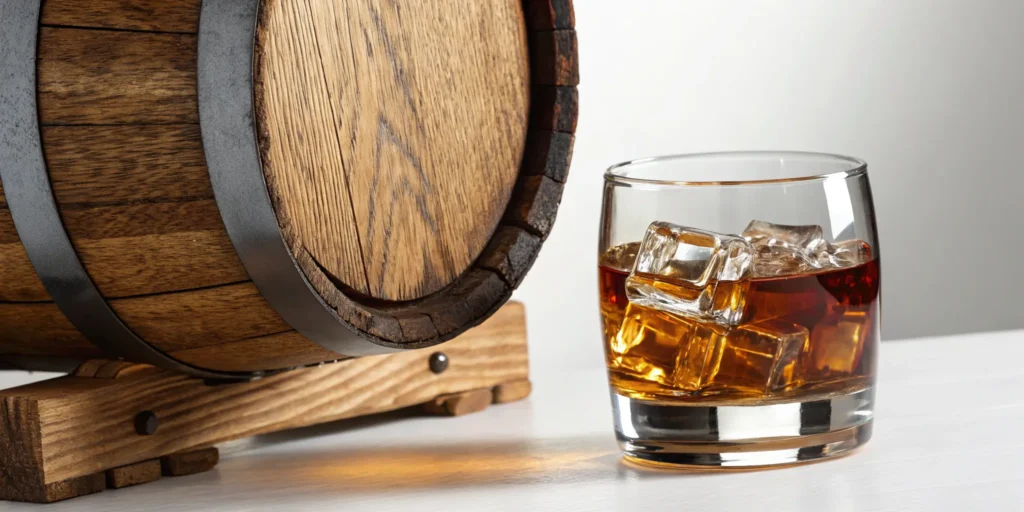
Every barrel of whiskey tells a story of grain, wood, and time. A cask strength bottling is the most honest version of that story you can find. It’s a pure and undiluted snapshot of the spirit at a specific moment in its maturation, capturing the exact character it held inside the barrel. This is the closest you can get to standing in the rickhouse with the master distiller, tasting the whiskey straight from the source. So, what does cask strength mean? It means you’re experiencing a direct reflection of the distiller’s craft and the unique influence of the cask, without any adjustments. It’s a genuine taste of the spirit’s journey.
## Key Takeaways
* **[Cask Strength is Whiskey at its Most Authentic](https://marydowling.com/what-is-single-barrel-cask-strength/)**: Bottled directly from the barrel without dilution, it offers a more powerful and complex flavor, letting you taste the spirit exactly as the distiller does.
* **Become Your Own Blender**: The high proof puts you in charge. Add water drop by drop to soften the intensity and unlock new aromas, creating a sip that’s perfectly suited to your palate.
* **Expect a Richer Texture and Fuller Flavor**: By skipping dilution, cask strength expressions retain natural oils and flavor compounds, which creates a more full-bodied texture and a longer, more satisfying finish.
## What is Cask Strength Whiskey?
If you’ve ever wanted to taste whiskey in its most authentic and powerful form, cask strength is your answer. Think of it as a direct line to the distiller’s craft, bottled just as it was tasted in the rickhouse. Unlike most whiskeys you see on the shelf, cask strength expressions skip the final step of dilution, where water is added to achieve a standard proof. Instead, you get the spirit straight from the barrel, full of the bold, complex character it developed during maturation. It’s an unfiltered look into the heart of the whiskey, offering a richer texture and a more intense flavor experience that puts you in control of the final sip.
### From Barrel to Bottle
The term “cask strength” is wonderfully literal. It means the whiskey is bottled at the exact alcoholic strength it had while aging in its cask, or barrel. After years of maturing, the spirit is simply filtered to remove any char or wood sediment and then bottled. There’s no water added to cut it down to a more common proof. This process preserves the whiskey in its purest state, capturing the full spectrum of flavors and aromas developed through its interaction with the wood. It’s a genuine taste of the spirit as the master distiller would have experienced it, right from the source.
### Cask Strength vs. Standard Whiskey
The main difference between cask strength and standard whiskey comes down to one simple ingredient: water. Most whiskeys are diluted with water before bottling to bring their alcohol by volume (ABV) down to a consistent level, typically around 40% (80 proof). This makes the product more uniform and approachable for a wider audience. Cask strength whiskey, on the other hand, is bottled without this dilution. Its ABV is much higher, usually falling between 52% and 66% (104-132 proof). This results in a more intense and variable spirit, as each barrel will have a slightly different final proof.
### Why Distillers Bottle at Cask Strength
Distillers choose to release cask strength expressions for one primary reason: flavor. The higher alcohol content carries more of the natural oils and flavor compounds (called esters) that give whiskey its unique taste and aroma. This creates a richer, more viscous mouthfeel and a more complex, concentrated flavor profile. Bottling at cask strength is also a nod to the whiskey enthusiast. It hands over the reins, allowing you to add as much or as little water as you like to open up the spirit and tailor it to your personal preference. It’s the ultimate way to appreciate the pure craftsmanship behind our whiskeys and explore their full depth, especially our [Double Oak Cask Strength Bourbon](https://marydowling.com/mary-dowling-double-oak/).
## How Strong is Cask Strength Whiskey?
When you see “cask strength” on a label, you can expect a whiskey that is significantly more potent than a standard bottle. It’s a bold, unfiltered expression of the spirit, bottled at the same proof it was when it left the aging barrel. This approach preserves the whiskey’s most authentic character, delivering an intensity that many enthusiasts seek out. But just how strong is it, and why does that strength vary? Let’s look at what’s happening inside the barrel.
### Understanding the ABV
Cask strength whiskeys are much stronger than their standard counterparts because they haven’t been diluted with water before bottling. Most whiskeys are brought down to a standard proof, often 40% [Alcohol by Volume (ABV)](https://en.wikipedia.org/wiki/Alcohol_by_volume), or 80 proof. Cask strength expressions, however, are bottled at their natural strength, which typically falls between 50% and 75% ABV (100 to 150 proof). Many land in the 60-65% ABV range. This higher alcohol content carries more of the flavorful compounds from the barrel, resulting in a richer, more complex taste. It’s the whiskey in its purest form, just as the distiller intended.
### Why Proof Varies by Barrel
You might think that every barrel in a warehouse would end up at the same proof, but the final ABV of a cask strength whiskey is never fixed. It changes over time due to a beautiful, natural process of evaporation known as the angel’s share. As whiskey ages in a porous oak barrel, a small amount of the spirit escapes through the wood and into the atmosphere. Depending on the climate, either more water or more alcohol will evaporate. In a warm, humid place like Kentucky, water evaporates faster than alcohol, causing the proof of the remaining whiskey to actually increase as it matures. This is why two barrels filled with the same spirit on the same day can have different proofs years later.
### How Climate Shapes the Spirit
The climate where a whiskey ages is a powerful force in determining its final character and strength. The warm, cycling seasons of Kentucky create a unique aging environment that is perfect for bourbon. As temperatures rise, the whiskey expands and pushes deep into the charred oak of the barrel, extracting sugars and flavor compounds. In cooler, damp climates like Scotland, the opposite often happens. More alcohol evaporates than water, causing the proof to slowly decrease over time. This difference in evaporation is significant; a Scottish distillery might lose 2% of its barrel volume per year, while a distillery in a hotter region could lose much more. This process concentrates the spirit, making every drop more intense and flavorful.
## How Does Cask Strength Change the Flavor?
Choosing a cask strength whiskey is about more than just a higher proof; it’s about experiencing a spirit in its most direct and unaltered state. When a whiskey is bottled straight from the barrel, it carries a concentration of flavors that are often softened or diluted in standard-proof expressions. This raw, powerful character is precisely what many whiskey lovers seek. It’s an authentic taste of the distiller’s craft, reflecting the unique journey of the spirit through aging without any adjustments.
This approach delivers a fundamentally different tasting experience. The higher alcohol content acts as a vehicle for a wider range of aromatic compounds, preserving the intricate notes developed in the cask. From a richer texture to a more complex profile, bottling at cask strength allows the whiskey’s true personality to shine. It’s an invitation to taste the spirit as the distillers first did, offering a pure and potent glimpse into the heart of the barrel.
### More Intense, Complex Flavors
The most immediate difference you’ll notice in a cask strength whiskey is its intensity. With an alcohol by volume (ABV) typically between 50% and 75%, it’s significantly more potent than a standard 80-proof (40% ABV) bottle. This isn’t just about the alcoholic heat; the higher proof carries a denser concentration of flavor. The aromatic compounds that create notes of vanilla, caramel, spice, and fruit are more pronounced. You’re getting a full-spectrum taste of the whiskey, with layers of complexity that might be muted in a more diluted version. It’s a bold, robust profile that commands your attention.
### Preserving Natural Oils and Compounds
Many cask strength whiskeys are also non-chill filtered. Chill filtration is a cosmetic process where whiskey is cooled so that certain natural fatty acids, esters, and proteins can be removed. This prevents the spirit from looking cloudy when chilled or when water is added. However, these compounds also contribute significantly to the whiskey’s flavor and texture. By skipping this step, distillers preserve the natural character of the spirit. This means you’re tasting a whiskey that retains all its original oils and flavor elements, offering a more authentic and full-bodied experience straight from the cask.
### A Richer Texture and Mouthfeel
Those natural oils and compounds that are preserved in non-chill filtered, cask strength whiskey do more than just add flavor. They also create a noticeably richer and more viscous mouthfeel. When you take a sip, the whiskey feels weightier and oilier on your palate, coating your tongue in a way that thinner, lower-proof spirits don’t. This fuller body helps the complex flavors linger, leading to a longer and more satisfying finish. The texture is a key part of the tasting experience, adding a luxurious quality that complements the intense flavor profile and makes each sip more memorable.
### A True Taste of Craftsmanship
Ultimately, drinking cask strength whiskey is about experiencing the spirit in its purest form. It’s the closest you can get to tasting what the master distiller tastes when they sample directly from the barrel. This undiluted expression is a direct reflection of the distiller’s art, the quality of the grain, and the influence of the cask over years of aging. It also puts you in control. Like [Mary Dowling](https://marydowling.com/her-story/) herself, who defied convention to forge her own path, you get to decide how you want to enjoy your whiskey. You can savor it neat or add a few drops of water to see how the flavors open up, tailoring each sip to your own preference.
## How to Drink Cask Strength Whiskey
One of the best things about cask strength whiskey is that it puts you in the driver’s seat. Unlike standard whiskeys that are diluted to a specific proof before bottling, a cask strength spirit is a pure expression of the barrel. This means you get to decide exactly how you want to experience it. There’s no single right way to enjoy it; the goal is to find the method that tastes best to you. Think of it as a collaboration between you and the distiller. They’ve done the hard work of crafting a bold, complex spirit, and now you get to tailor the final sip. It’s a chance to experiment and discover the nuances of flavor on your own terms, much like [Mary Dowling](https://marydowling.com/her-story/) herself, who never let convention stand in her way.
### Neat vs. A Splash of Water
The most straightforward way to experience a cask strength whiskey is to drink it neat, with nothing added. This gives you the most direct and potent taste of the spirit exactly as it came from the barrel. You’ll get the full force of its aroma and flavor profile, along with the alcoholic warmth often called “heat.” For many enthusiasts, this is the purest way to appreciate the distiller’s craft. On the other hand, adding a small splash of water can completely transform the experience. It gives you control over the intensity, softening the alcoholic heat and allowing more subtle flavors to come forward. Neither approach is better than the other; it’s all about your personal preference.
### The Magic of Dilution
Adding water to whiskey isn’t just about toning it down; it’s about opening it up. When you add a few drops of water, a fascinating chemical reaction occurs. Certain flavor compounds that were tightly bound together are released, allowing them to rise to the surface. This can make specific aromas, like fruity, floral, or smoky notes, much more pronounced. The key is to do it slowly. Using a pipette or a straw, add water one drop at a time, swirling and tasting after each addition. You’ll notice the flavor profile shifting with each drop until you find the perfect balance for your palate. This careful process is a fantastic way to explore the depth of our [award-winning whiskeys](https://marydowling.com/our-whiskeys/).
### Should You Add Ice?
Adding ice is another popular way to enjoy cask strength whiskey, but it does something different than just adding water. Ice will both dilute and chill your drink. The cold temperature can slightly numb your taste buds, which can mute some of the whiskey’s more complex flavors. However, it can also make for an incredibly smooth and refreshing sip, especially on a warm day. If you prefer your drinks chilled, a large, slow-melting ice cube is your best bet, as it will cool the whiskey with minimal dilution. If you’re looking for inspiration on how to incorporate whiskey with other chilled ingredients, you can explore some of our favorite [cocktail recipes](https://marydowling.com/recipes/).
### Find Your Perfect Sip
Ready to find your ideal way to drink cask strength whiskey? The best approach is to start small and experiment. Pour a small amount, about half an ounce, into your glass. First, take a tiny sip of it neat to get a baseline of its full-strength character. Notice the aroma, the taste on your tongue, and the finish. Then, begin adding cool, still water drop by drop. After each addition, give the glass a gentle swirl and taste it again. Pay attention to how the flavors change and evolve. Keep going until you hit that sweet spot where the balance of flavor and intensity is perfect for you. This simple ritual turns every glass into a personal tasting journey.
## Common Cask Strength Myths, Busted
Cask strength whiskey has an aura of mystery, and with that comes a few misunderstandings. This style of whiskey is bold and unapologetic, much like Mary Dowling herself, but it’s also often misinterpreted. Let’s clear the air and tackle some of the most common myths head-on.
### Myth: It’s Too Strong to Enjoy
The high proof on a cask strength bottle can seem intimidating, but “strong” doesn’t mean “unpleasant.” It simply means you’re tasting the whiskey in its purest, most intense form, exactly as it was in the barrel. Think of it as an invitation, not a challenge. You are in complete control of the experience. By adding a few drops of water, you can gradually lower the proof to your personal sweet spot, opening up new layers of aroma and flavor with each addition. It’s your chance to engage with the spirit and find the perfect expression for your palate.
### Myth: Cask strength and barrel proof are the same
While these terms are often used interchangeably, there can be a subtle difference. Both refer to whiskey that is bottled without the addition of water to dilute its proof. However, some distillers use “barrel proof” specifically for whiskey that comes from a single barrel. “Cask strength,” on the other hand, might be used for a small batch created by mingling several barrels together before bottling, still at their original, undiluted proof. In either case, you’re getting a spirit that is a direct and honest representation of its time in the cask.
### Myth: It’s always higher quality
Cask strength whiskey is prized for its authenticity. Because it’s typically non-chill filtered and undiluted, it retains all the natural oils and fatty acids that contribute to a richer mouthfeel and more complex flavor profile. But this doesn’t automatically make it a “better” whiskey. Quality starts with the spirit itself. A poorly made whiskey won’t be saved by a high proof. Instead, think of cask strength as the most genuine expression of a distiller’s craft. It’s a direct taste of our [meticulously crafted whiskeys](https://marydowling.com/our-whiskeys/) in their most unadulterated form.
### Myth: It’s too expensive or hard to find
You’ll often notice a higher price on cask strength bottles, and there’s a simple reason for it. Since no water is added to stretch the volume, distillers yield fewer bottles per barrel. But consider the value: you’re getting a more concentrated spirit. If you choose to add water, you can make the bottle last just as long as a standard-proof one. As for availability, while some releases are limited, finding exceptional cask strength whiskey is easier than ever. A quick search on our [store locator](https://marydowling.com/find-a-store/) can point you toward a bottle that’s waiting for you.
## Related Articles
* [What is Cask Strength Bourbon?](https://marydowling.com/what-is-cask-strength-bourbon/)
* [Cask Strength vs. Barrel Proof](https://marydowling.com/cask-strength-vs-barrel-proof/)
* [What Is Single Barrel Cask Strength? A Guide](https://marydowling.com/what-is-single-barrel-cask-strength/)
## Frequently Asked Questions
**Is [cask strength whiskey](https://marydowling.com/understanding-cask-strength-bourbon/) only for experienced drinkers?** Not at all. While the high proof might seem intense, cask strength whiskey is actually perfect for anyone who wants to be in control of their drink. The beauty of it is that you can add water drop by drop to adjust the intensity to your liking. It’s less about having a seasoned palate and more about being curious enough to experiment and find the balance that tastes best to you.
**Can I use cask strength whiskey in cocktails?** Absolutely, and it can make for an incredible cocktail. Because of its concentrated flavor, cask strength whiskey holds its own against other strong ingredients like bitters or sweet vermouth. A classic Old Fashioned or Manhattan made with a cask strength spirit will have a wonderful richness and depth. Just remember that a little goes a long way; you might want to adjust your recipe slightly to account for the higher proof.
**What does “non-chill filtered” mean and why is it important?** Non-chill filtered means the whiskey skips a cosmetic process where it’s chilled to remove natural oils and fatty acids. Some producers do this to prevent the spirit from looking cloudy when it gets cold. We prefer to leave those elements in because they are packed with flavor and contribute to a richer, fuller texture. It’s a key part of tasting the whiskey in its most authentic state.
**Why does the proof sometimes increase during aging?** This fascinating process is all about the climate. In a place with warm, humid summers like Kentucky, water molecules are small enough to escape through the barrel’s wood pores faster than the larger alcohol molecules. As more water evaporates over the years, the concentration of alcohol in the remaining liquid goes up, naturally increasing the proof of the whiskey inside.
**How should I store my cask strength whiskey once it’s open?** The best way to care for your bottle is to store it upright in a cool, dark place, like a cabinet or pantry. Storing it upright prevents the high-proof spirit from eroding the cork over time. Keeping it away from sunlight and temperature swings helps preserve its flavor. Once you’ve enjoyed about half the bottle, you might notice the taste changing slightly as more air gets inside, so it’s always best to enjoy it within a year or two of opening.

Justin Pakdaman is the Marketing Director for Mary Dowling Whiskey Co., where he leads brand storytelling, digital strategy, and consumer engagement. Justin has years of experience building premium spirits brands.