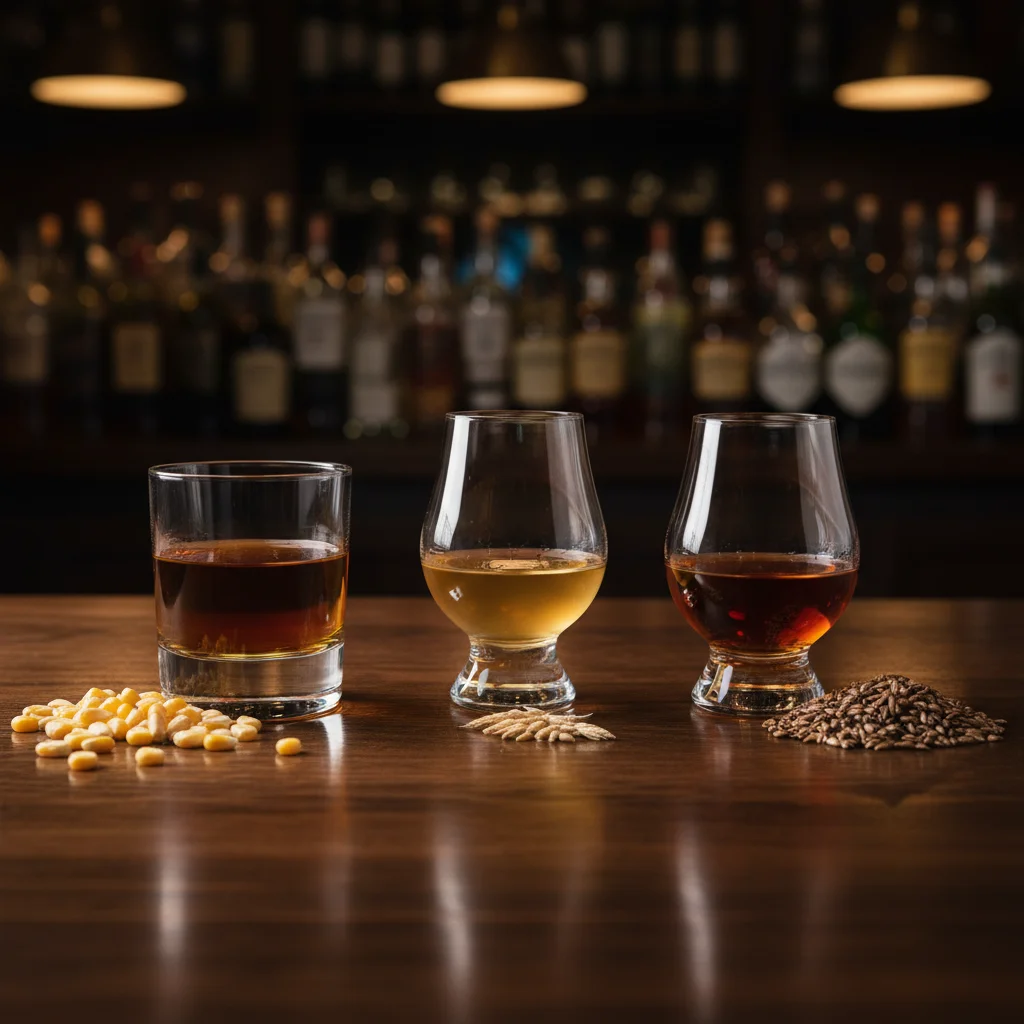
Walk into any spirits aisle or cocktail bar and you’ll face the same question: what’s the difference between bourbon, whiskey, and scotch? They look similar in the glass, share a family tree, and even taste related. But these three spirits are as distinct as the regions that created them. Bourbon is sweet and bold, born from American corn and new charred oak. Scotch is complex and often smoky, shaped by Scottish barley and maritime air. And whiskey? It’s the broad category that holds them all. Understanding these differences isn’t just trivia; it’s the key to ordering with confidence, gifting the right bottle, and appreciating what’s actually in your glass. This guide breaks down the legal definitions, production methods, flavor profiles, and regional identities that separate bourbon, whiskey, and scotch once and for all.
## Key Takeaways
- All bourbon is whiskey, but not all whiskey is bourbon (or scotch). Whiskey is the broad family. Bourbon and scotch are specific types, each defined by strict legal rules governing ingredients, production, and geography.
- Ingredients and barrels drive the flavor differences. Bourbon’s corn-forward mash bill and new charred oak barrels produce sweet vanilla and caramel notes. Scotch’s malted barley and reused casks create drier, more complex flavors that can range from fruity to smoky.
- Geography matters more than you think. Bourbon must be made in the USA. Scotch must be made in Scotland. These aren’t just labels; climate, water, and tradition shape every sip.
## What Is Whiskey? The Parent Category
Before comparing bourbon and scotch, it helps to understand the family they both belong to. Whiskey (or whisky, depending on where it’s made) is a broad category of distilled spirits made from fermented grain mash and aged in wooden barrels. That’s the common thread connecting every bottle, from a Kentucky straight bourbon to a Japanese single malt.
The word itself comes from the Gaelic “uisce beatha,” meaning “water of life,” and the spirit has been produced for centuries across the globe. Every whiskey-producing country has developed its own traditions, regulations, and flavor signatures. Irish whiskey is typically triple-distilled for smoothness. Canadian whisky is often blended and lighter-bodied. Japanese whisky draws inspiration from Scottish methods but adds its own precision. American whiskey includes bourbon, rye, Tennessee whiskey, and more.
What unites them all is the basic process: grain is mashed, fermented, distilled, and aged in wood. The specific choices at each step, from grain type to barrel selection to aging climate, are what create the extraordinary diversity within the whiskey world.
## What Is Bourbon? America’s Native Spirit
Bourbon isn’t just any American whiskey. It’s a legally defined category with strict requirements set by U.S. federal standards. These rules exist to protect the spirit’s integrity and ensure that when you pick up a bottle labeled “bourbon,” you know exactly what you’re getting.
### The Legal Requirements
To carry the name “bourbon,” a whiskey must meet all of these criteria:
- Made in the USA: Bourbon must be produced in the United States. While about 95% comes from Kentucky, it can legally be made in any state.
- At least 51% corn: The grain recipe (mash bill) must contain a minimum of 51% corn, which is responsible for bourbon’s signature sweetness.
- New charred oak barrels: Bourbon must be aged in brand-new, charred oak containers. This is non-negotiable and is the biggest driver of bourbon’s vanilla, caramel, and toffee notes.
- Distilled to no more than 160 proof (80% ABV) and entered into the barrel at no more than 125 proof (62.5% ABV).
- Bottled at a minimum of 80 proof (40% ABV).
- No additives: Nothing can be added except water. No coloring, no flavoring. The color and taste come entirely from the grain and the barrel.
These rules aren’t arbitrary. The high corn content guarantees sweetness. The new charred barrels ensure maximum flavor extraction from the wood. And the “no additives” rule means what you taste is pure craftsmanship, from grain to glass.
### Bourbon’s Flavor Profile
Bourbon is known for a warm, approachable flavor built on a foundation of sweetness. The corn-heavy mash bill delivers caramel, vanilla, and honey. The new charred oak adds layers of toasted wood, brown sugar, and baking spice. Depending on the secondary grains in the mash bill, you’ll find different personality traits:
- Wheated bourbons (like Mary Dowling Winter Wheat Bourbon) use wheat as the secondary grain, producing a softer, rounder, and more approachable spirit with notes of bread, vanilla, and gentle sweetness.
- High-rye bourbons (like Mary Dowling Tequila Barrel Finish) use a higher proportion of rye grain, delivering bolder spice, black pepper, and cinnamon notes.
The result is a spirit that works beautifully neat, on the rocks, or in classic cocktails. If you want to understand how bourbon is crafted from start to finish, our guide on how bourbon is made walks through every step of the process.
## What Is Scotch? Scotland’s Signature Spirit
Scotch whisky (always spelled without the “e” in Scotland) is one of the most regulated spirits in the world. Like bourbon, it earns its name through a strict set of legal requirements, but the rules are very different, producing a fundamentally different drinking experience.
### The Legal Requirements
To be called Scotch whisky, a spirit must meet these criteria:
- Made in Scotland: Every step of production, from mashing to maturation, must take place in Scotland.
- Aged at least 3 years: Scotch must mature in oak casks in Scotland for a minimum of three years. Most quality scotch ages far longer.
- Made from water and malted barley (for single malt scotch). Blended scotch can include other grains.
- Distilled to no more than 94.8% ABV and bottled at a minimum of 40% ABV.
- No added substances other than water and plain caramel coloring (E150a).
### Types of Scotch
Scotch comes in several distinct categories:
- Single Malt: Made from 100% malted barley at a single distillery. Often considered the pinnacle of scotch, these showcase a distillery’s unique character.
- Single Grain: Made at a single distillery but can include grains other than malted barley.
- Blended Malt: A blend of single malts from two or more distilleries.
- Blended Scotch: A mix of single malt and single grain whiskies. This is the most common type, accounting for the majority of scotch sold worldwide.
### Scotch’s Flavor Profile
Scotch’s flavor varies dramatically by region and style, but common characteristics include:
- Speyside: Fruity, honeyed, and elegant with notes of apple, pear, and vanilla.
- Highland: Diverse, ranging from floral and heathery to rich and full-bodied.
- Islay: Intensely smoky and peaty, with notes of iodine, seaweed, and campfire.
- Lowland: Light, grassy, and delicate with citrus notes.
The use of peat, a decomposed plant material burned during malting, is what gives some scotch its distinctive smoky character. Not all scotch is peated, though. Many Speyside and Highland scotches are light and fruity with no smoke at all.
## Bourbon vs. Whiskey vs. Scotch: Side-by-Side Comparison
Here’s how these three stack up across the key categories that matter most:
| Category | Whiskey (General) | Bourbon | Scotch |
|---|---|---|---|
| Definition | Distilled spirit made from fermented grain, aged in wood | American whiskey with at least 51% corn, aged in new charred oak | Whisky made in Scotland from malted barley, aged 3+ years in oak |
| Primary Grain | Varies (corn, barley, rye, wheat) | Corn (minimum 51%) | Malted barley (for single malt) |
| Barrel Type | Varies by type | New, charred American oak (required) | Used oak casks (often ex-bourbon or ex-sherry) |
| Minimum Aging | Varies by type | No minimum (but “straight” requires 2 years) | 3 years minimum |
| Geography | Made worldwide | Must be made in the USA | Must be made in Scotland |
| Spelling | “Whiskey” (US, Ireland) or “Whisky” (Scotland, Japan, Canada) | Whiskey | Whisky (no “e”) |
| Flavor Profile | Depends on style | Sweet, warm: vanilla, caramel, oak, baking spice | Complex: fruity, malty, smoky (varies by region) |
| Additives Allowed | Varies | None (water only) | Water and plain caramel coloring (E150a) |
| Common Styles | Irish, Canadian, Japanese, American, Scotch | Wheated, high-rye, single barrel, cask strength | Single malt, blended, peated, unpeated |
The key insight from this comparison: bourbon and scotch are both whiskey, but they take fundamentally different paths. Bourbon leans into sweetness through corn and new oak. Scotch favors complexity through barley, used casks, and terroir. Neither approach is better; they’re different philosophies of the same craft.
## How Production Methods Create Different Flavors
The flavor differences between bourbon and scotch aren’t random. They’re the direct result of deliberate choices made at every stage of production. Understanding these choices helps explain why a glass of Mary Dowling bourbon tastes nothing like a glass of Islay scotch.
### Grain Selection
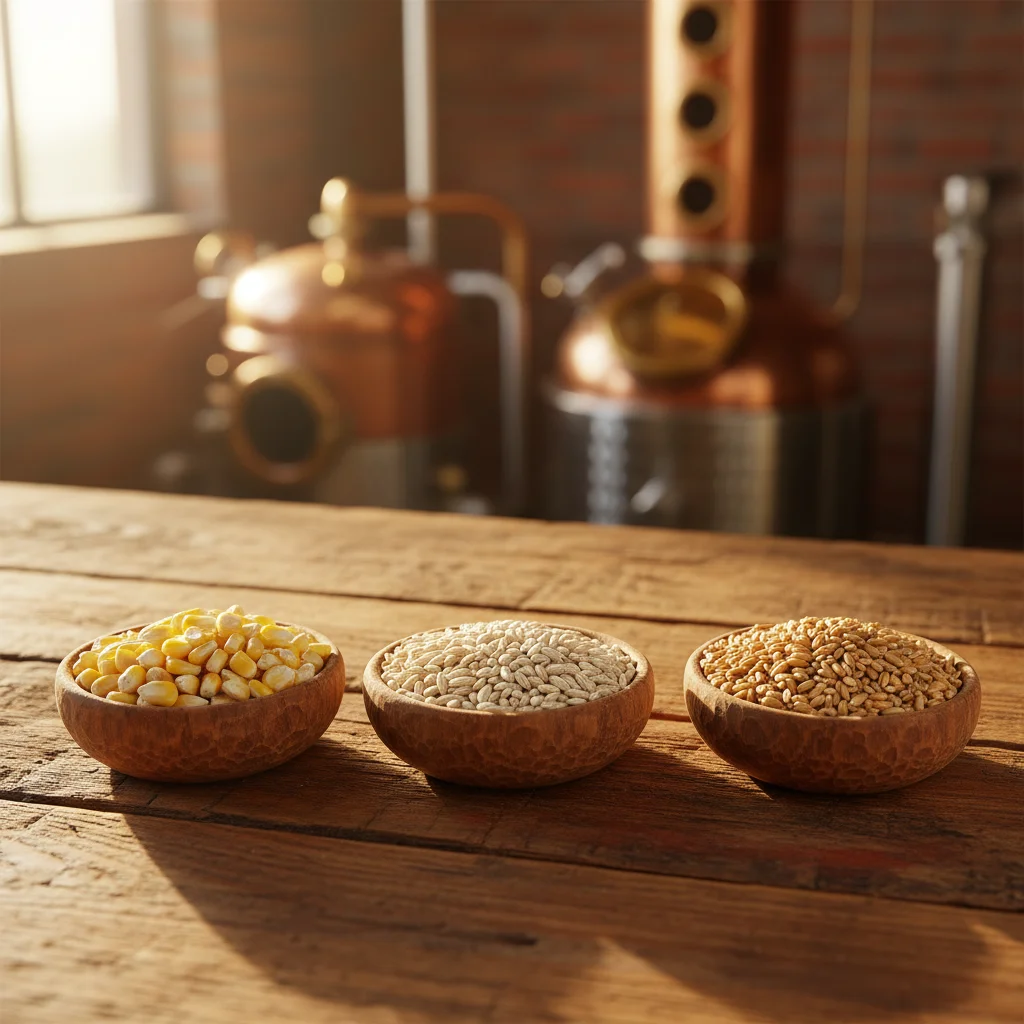
Bourbon’s minimum 51% corn creates a naturally sweet spirit from day one. That sweetness is baked into the DNA of every bourbon before it ever touches a barrel. The remaining grains, whether rye, wheat, or malted barley, add spice, softness, or depth. You can explore how different mash bills shape bourbon’s character in our detailed breakdown.
Scotch single malts use 100% malted barley, which produces a drier, more cereal-forward base spirit. Barley doesn’t have corn’s inherent sweetness, so scotch relies more heavily on the aging process and cask selection to develop its flavor.
### Barrel Aging
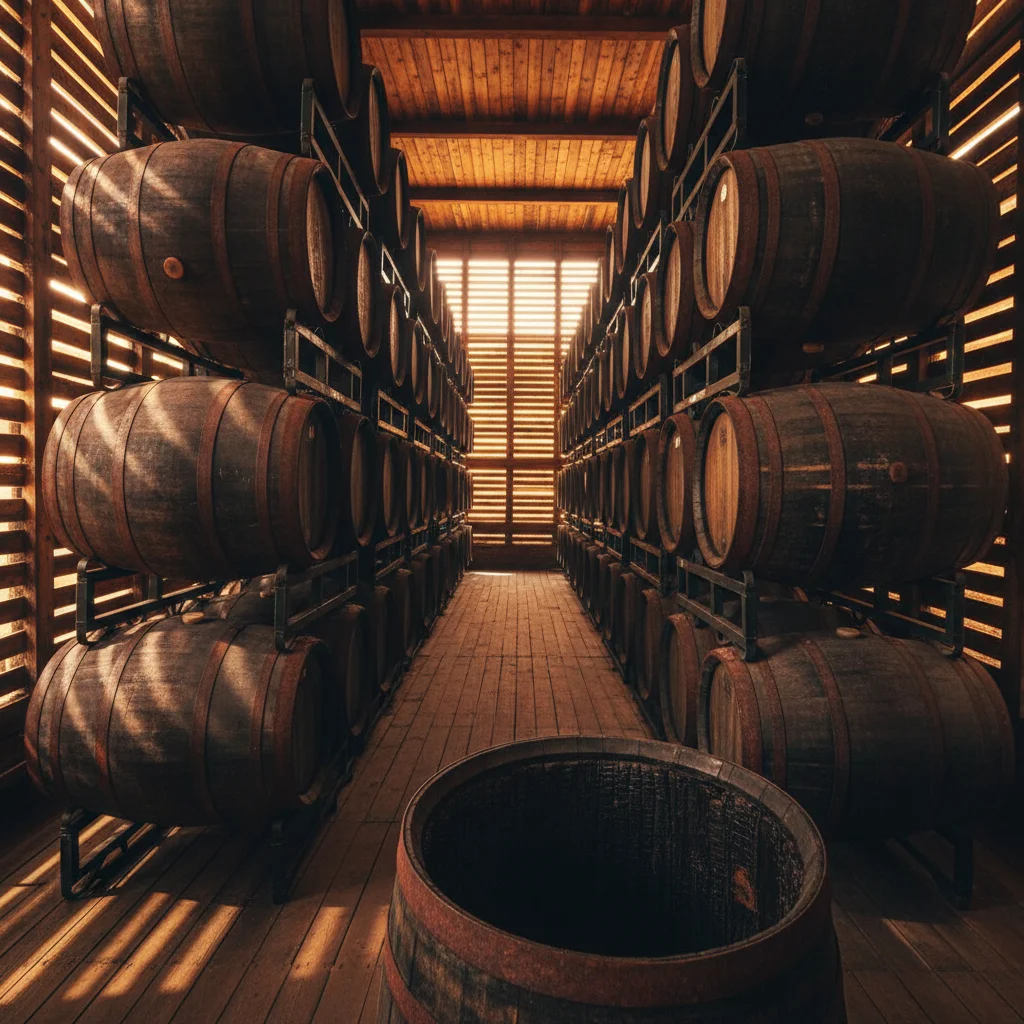
This is where the biggest flavor gap emerges. Bourbon must use new charred oak barrels, which means every drop of spirit gets the full impact of fresh wood. Virgin oak is loaded with compounds like vanillin, lactones, and tannins, which is why bourbon has such pronounced vanilla, coconut, and caramel flavors. The charring caramelizes the wood’s natural sugars, creating that signature sweetness.
Scotch uses previously used casks, most commonly ex-bourbon barrels (a nice bit of recycling between the two industries). Because the cask has already given up much of its bold oak character to the bourbon, scotch extracts subtler, more nuanced flavors. Ex-sherry casks are also popular, imparting dried fruit, chocolate, and spice notes that are distinctly different from bourbon’s profile.
### Climate and Aging
Kentucky’s dramatic temperature swings, hot summers and cold winters, cause bourbon to expand into and contract out of the barrel aggressively. This accelerates flavor extraction, which is why a bourbon aged 4 to 8 years can develop remarkable depth.
Scotland’s cooler, more stable climate means scotch ages more slowly and gently. The spirit loses less volume to evaporation (the “angel’s share” is lower), and the flavor development is more gradual. This is partly why scotch typically ages longer; 12, 15, or 18 years is common for premium expressions.
### Peat and Smoke
This is a distinctly scotch tradition. Some Scottish distilleries dry their malted barley over peat fires, infusing the grain with smoky phenolic compounds before distillation even begins. The result is the dramatic, campfire-like smokiness that defines Islay scotch. Bourbon has no equivalent tradition. Any smoky character in bourbon comes from the charred barrel, which is a warmer, sweeter kind of smoke compared to peat’s briny, medicinal intensity.
## Which Should You Drink? A Practical Guide
Choosing between bourbon, scotch, and other whiskeys comes down to what flavors you enjoy and what occasion you’re drinking for. Here’s a straightforward guide:
### Choose Bourbon If You Like
- Sweet, warm, approachable flavors
- Vanilla, caramel, honey, and baking spice
- Cocktails like Old Fashioneds, Whiskey Sours, or Mint Juleps
- A spirit that’s easy to enjoy neat or on the rocks without an acquired taste
Mary Dowling offers three distinct expressions that showcase bourbon’s range: the Winter Wheat Bourbon for soft, approachable sipping, the Tequila Barrel Finish for adventurous flavor seekers, and the Double Oak Cask Strength for those who want bold, barrel-proof complexity. Each expression honors the legacy of the Mother of Bourbon.
### Choose Scotch If You Like
- Complex, layered flavors that reward slow sipping
- Fruit, malt, and honey (unpeated styles)
- Smoke, peat, and maritime character (Islay styles)
- A spirit with long aging and a sense of place
### Choose Other Whiskeys If You Like
- Irish whiskey: Smooth, light, and approachable (great for beginners)
- Rye whiskey: Spicy, bold, and assertive (perfect for Manhattans)
- Japanese whisky: Precise, balanced, and refined (elegant sipping)
- Canadian whisky: Light, smooth, and versatile (great mixers)
## Frequently Asked Questions
### Is bourbon stronger than scotch?
Not necessarily. Both are typically bottled between 40% and 50% ABV (80-100 proof). Some bourbons, like cask strength expressions, can reach 60%+ ABV, but many scotches also offer cask strength releases. The proof depends on the individual bottle, not the category.
### Why is scotch often more expensive than bourbon?
Several factors contribute. Scotch must age a minimum of three years, and many premium expressions age 12 to 25 years, tying up inventory and warehouse space. Import duties and shipping costs also add to the price for non-UK consumers. Bourbon’s use of new barrels and Kentucky’s climate allow for faster maturation, which can keep costs lower.
### Can you use scotch in a bourbon cocktail (or vice versa)?
You can, but the result will be different. Bourbon’s sweetness works beautifully in Old Fashioneds and Whiskey Sours. Scotch’s drier, more complex profile changes the character of those drinks significantly. Some cocktails, like the Rob Roy (essentially a scotch Manhattan) and the Penicillin, are specifically designed for scotch’s flavor profile.
### Is bourbon sweeter than scotch?
Generally, yes. Bourbon’s high corn content and new charred oak aging produce more pronounced sweet notes, like vanilla, caramel, and honey. Scotch, made from malted barley and aged in used casks, tends toward drier, more complex flavors. That said, some sherried scotches can be quite sweet, and some high-rye bourbons lean more toward spice than sugar.
### What’s the difference between bourbon and whiskey?
Bourbon is a type of whiskey, just like scotch is a type of whisky. The difference is that bourbon has specific legal requirements (51% corn, new charred oak barrels, made in the USA) that set it apart from other whiskeys. For a deeper dive, see our guide on whether bourbon and whiskey are the same.
### How is bourbon different from Tennessee whiskey?
Tennessee whiskey meets all of bourbon’s legal requirements but adds one extra step: the Lincoln County Process, where the spirit is filtered through sugar maple charcoal before barreling. This creates a slightly smoother, mellower character. Read our full breakdown of Kentucky bourbon vs. Tennessee whiskey.
## The Bottom Line
Bourbon, whiskey, and scotch aren’t interchangeable terms; they represent distinct spirits with different rules, ingredients, and identities. Whiskey is the broad family. Bourbon is the American branch, built on corn sweetness and new oak richness. Scotch is the Scottish branch, shaped by barley, used casks, and centuries of tradition.
The best way to understand the differences isn’t just reading about them; it’s tasting them. Start with a bourbon like Mary Dowling Winter Wheat Bourbon, which showcases bourbon’s approachable warmth and vanilla sweetness at its finest. Then pour a scotch alongside it and let your palate tell you the story. To discover the remarkable woman behind the bourbon, read the story of Mary Dowling.
Ready to explore bourbon’s side of the family? Shop Mary Dowling whiskeys online or find a store near you.

Justin Pakdaman is the Marketing Director for Mary Dowling Whiskey Co., where he leads brand storytelling, digital strategy, and consumer engagement. Justin has years of experience building premium spirits brands.