Key Takeaways
- Bourbon must be at least 51% corn: Federal law dictates the grain requirements, but distillers differentiate their whiskey through the remaining grains in their mash bill, such as wheat, rye, or malted barley.
- Every step shapes the final flavor: From grain selection and mashing to fermentation, distillation, and barrel aging, each stage of the bourbon production process adds distinct character to the finished spirit.
- The barrel is the biggest flavor contributor: Bourbon must age in new, charred American oak barrels. The interaction between spirit and wood over time creates the caramel, vanilla, and spice notes bourbon is known for.
What Is Bourbon Whiskey Made From?
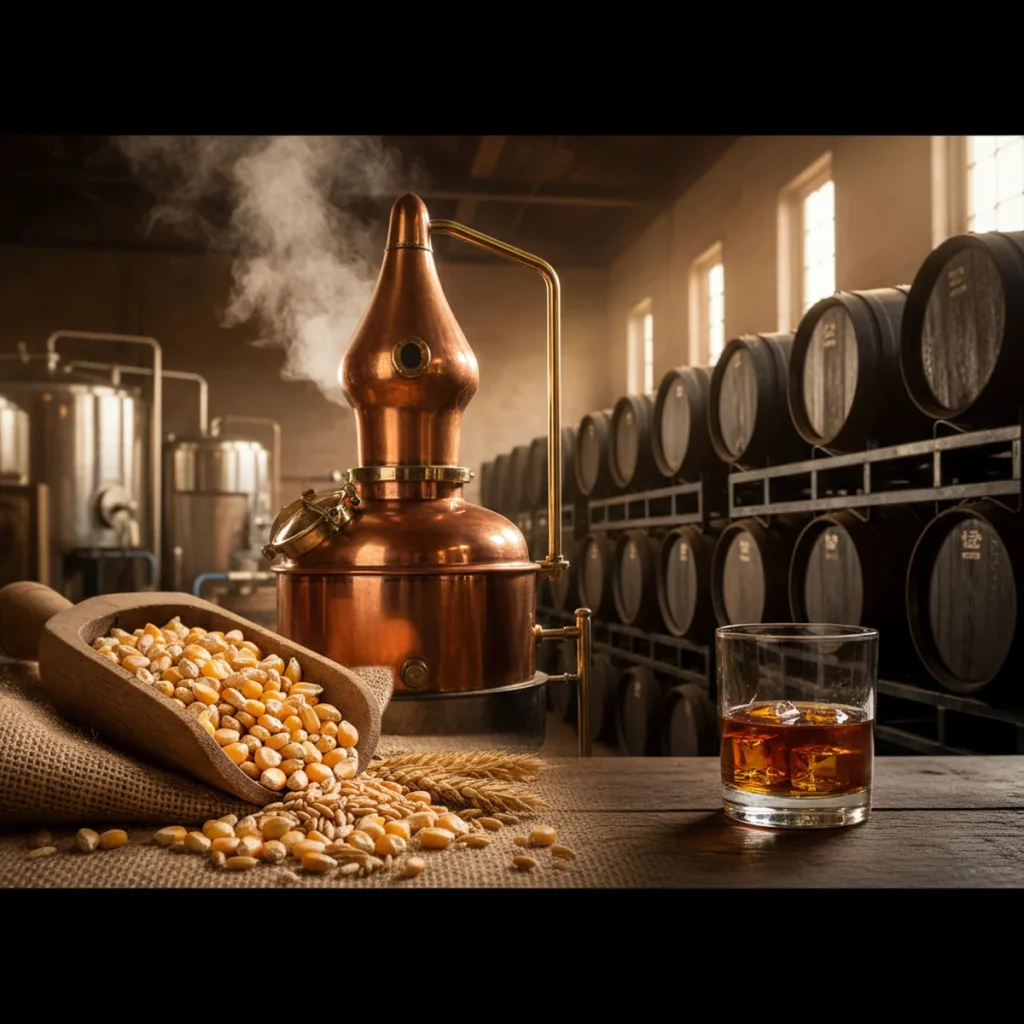
If you’ve ever wondered what is bourbon whiskey made from, the answer starts in the grain field. By federal law, bourbon’s grain recipe, called a mash bill, must contain at least 51% corn. This corn-forward foundation gives bourbon its signature sweetness and full body.
But that’s just the starting point. The remaining 49% is where distillers express their creativity. Most bourbons use one of three secondary grain profiles:
- Traditional (rye-forward): Corn, rye, and malted barley. The rye adds spice, pepper, and complexity.
- Wheated: Corn, wheat, and malted barley. Wheat produces a softer, sweeter, more approachable spirit. Learn more about wheated bourbon mash bills.
- High-rye: A higher proportion of rye for bolder, spicier character.
Mary Dowling Whiskey Co. crafts both styles. Our Winter Wheat Bourbon uses winter wheat as its secondary grain, creating a remarkably smooth and elegant profile with notes of cherry, honey, and toasted almond. Our Tequila Barrel Finish starts as a high-rye bourbon, delivering a bolder foundation that stands up beautifully to its reposado tequila cask finish.
Beyond the mash bill, bourbon also requires pure limestone-filtered water, a natural resource Kentucky has in abundance. The high calcium and low iron content of this water creates ideal conditions for fermentation and contributes to bourbon’s clean, mineral character.
Step 1: Milling the Grain
The bourbon production process begins with milling. Raw grains, primarily corn along with the chosen secondary grains, are ground into a coarse meal using a hammer mill or roller mill. The goal is to crack open the grain kernels and expose their starchy interior without grinding them so fine they create a paste.
Proper milling is critical. Grind too coarse and you leave fermentable sugars locked inside the grain. Grind too fine and you risk a stuck mash that won’t drain properly. Experienced distillers know exactly the texture they need for efficient conversion.
Step 2: Mashing — Cooking the Grains
Mashing is where the grain’s starches are converted into fermentable sugars. The milled grain is combined with hot water in a large vessel called a mash tun, and the mixture is cooked at carefully controlled temperatures.
Different grains are added at different temperatures because each converts at its own pace:
- Corn goes in first at the highest temperature (around 200°F). Its tough starches need the most heat to break down.
- Rye or wheat is added as the temperature drops to around 150–160°F.
- Malted barley is added last at the lowest temperature (around 145–150°F). It contains natural enzymes that convert all the starches from every grain into simple sugars.
The result is a sweet, porridge-like liquid called the mash. Many Kentucky distilleries, including those producing bourbon for brands like Mary Dowling, also use a technique called sour mashing. This involves adding a portion of leftover liquid (called backset or stillage) from the previous distillation into the new mash. The backset lowers the pH, controls bacteria, and ensures consistency from batch to batch.
Step 3: Fermentation — Creating the Wash
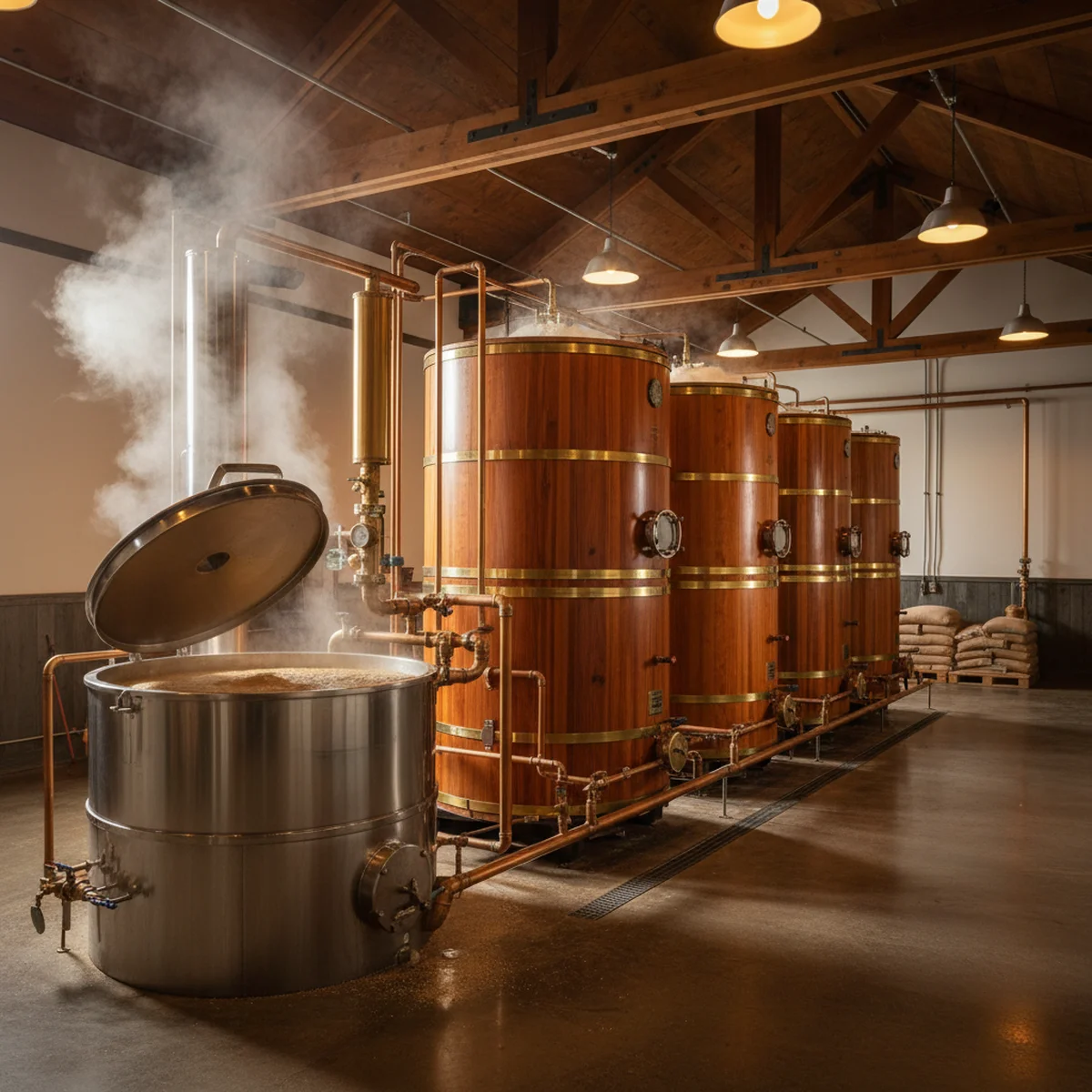
Once the mash cools to around 60–70°F, it’s transferred to large fermentation vessels. Traditional distillers use cypress wood fermenters, while many modern operations use stainless steel tanks. Yeast is then added, and fermentation begins.
Yeast is one of bourbon’s unsung heroes. Each distillery guards its proprietary yeast strain carefully, and for good reason: yeast doesn’t just convert sugar into alcohol. It also produces hundreds of flavor compounds called congeners, including esters, aldehydes, and organic acids that contribute fruity, floral, and spicy notes.
Fermentation typically runs for three to five days. During this time, the yeast consumes the sugars in the mash and produces a beer-like liquid called the “distiller’s beer” or “wash.” This wash is only about 8–10% alcohol, but it’s packed with the flavor precursors that will concentrate during distillation.
Step 4: Distillation — Separating the Spirit
Distillation is the process of heating the fermented wash to separate alcohol from water. Since alcohol boils at a lower temperature (173°F) than water (212°F), the distiller can selectively capture the alcohol vapors and condense them into a higher-proof spirit.
Most bourbon goes through two rounds of distillation:
- Column still (first distillation): The wash enters a tall copper column still, sometimes called a beer still. As it flows down through perforated copper plates, steam rises from below, stripping the alcohol and flavor compounds from the liquid. The result, called “low wine,” exits the still at around 125–130 proof.
- Doubler or thumper (second distillation): The low wine passes through a second still for further refinement. This step smooths out harsh flavors and increases the proof. By law, bourbon cannot be distilled above 160 proof (80% ABV), which preserves the grain character in the spirit.
The fresh distillate, called “white dog” or “new make,” is clear and intensely grainy. It’s essentially unaged whiskey. At this point, it must be diluted to no more than 125 proof before entering the barrel for aging.
Step 5: Barrel Aging — Where Bourbon Gets Its Character
This is where bourbon truly becomes bourbon. By law, the spirit must age in new, charred American oak barrels. There is no minimum aging requirement for bourbon (though “straight bourbon” must age at least two years), but the barrel interaction is responsible for an estimated 60–70% of bourbon’s final flavor.
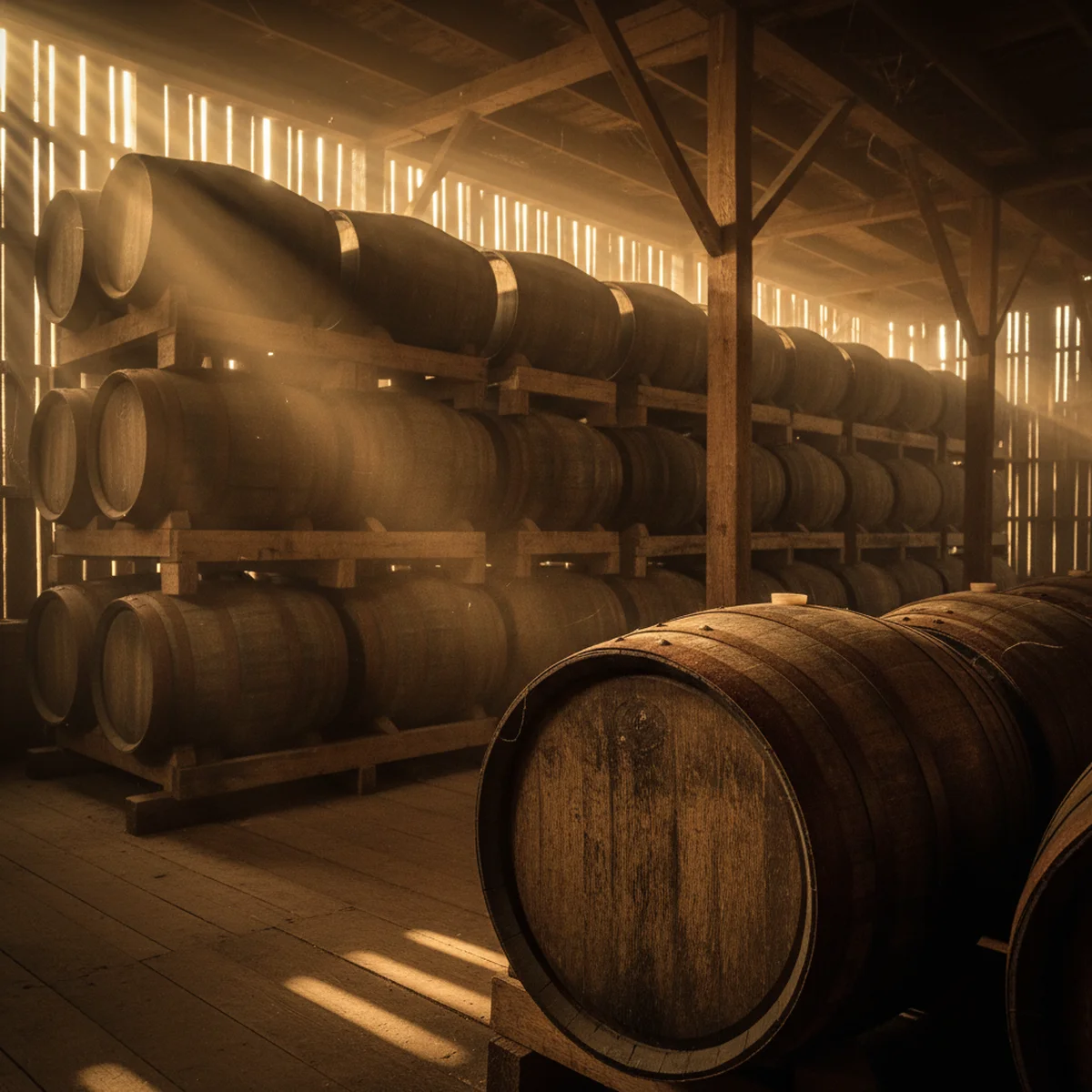
Here’s what happens inside the barrel:
- Charring creates a carbon filter: The interior char layer (typically a #3 or #4 char) acts as an activated carbon filter that strips harsh compounds from the raw spirit.
- Wood sugars caramelize: The heat of charring and toasting caramelizes the wood’s natural sugars, creating the caramel, toffee, and brown sugar notes bourbon is known for.
- Seasonal breathing: As Kentucky temperatures swing from summer highs to winter lows, the whiskey expands into the wood and contracts back out. This “breathing” pulls flavor compounds from deep within the oak staves.
- Color development: Bourbon enters the barrel completely clear. Every bit of its amber and copper color comes from the oak.
How Mary Dowling Approaches Barrel Aging
At Mary Dowling Whiskey Co., our barrel program is central to what makes our whiskeys distinctive. We partner exclusively with Kelvin Cooperage for our custom barrels, and we push the craft further than most:
- Winter Wheat Bourbon: Aged in #3 wood-fired, toasted and charred new American oak barrels from Kelvin Cooperage. The toasting step adds layers of baking spice and caramel complexity that complement the soft wheat grain character.
- Double Oak Cask Strength: This expression rests in two different Kelvin Cooperage barrels. First in #4 wood-fired, toasted, and charred new American oak, then in a second #1 new American oak barrel with a #1 char and heavy toast. This double barrel aging process creates extraordinary depth, with notes of tobacco, chocolate, anise, and cherry. Explore our Double Oak expression.
- Tequila Barrel Finish: Our high-rye bourbon first matures in #3 wood-fired, toasted, and charred new American oak, then finishes in reposado tequila barrels, adding subtle notes of agave, citrus, and herbal complexity.
Step 6: Proofing and Bottling
When the master distiller determines a barrel (or batch of barrels) has reached peak maturity, the bourbon is dumped from the barrel and prepared for bottling.
Most bourbons are proofed down, meaning pure limestone-filtered water is added to bring the whiskey to its target bottling proof. Mary Dowling Winter Wheat is bottled at 91 proof (45.5% ABV) and the Tequila Barrel at 93 proof (46.5% ABV), both retaining robust flavor while remaining approachable.
Our Double Oak Cask Strength, however, goes into the bottle at barrel proof, with no water added. This means every bottle reflects the exact proof the whiskey reached through its time in two different barrels, delivering the full, uncut intensity of the spirit.
The bourbon is then typically chill-filtered (though some craft producers skip this step to preserve body and texture) and bottled.
The Legal Requirements: What Makes Bourbon, Bourbon
Understanding how to make bourbon whiskey also means knowing the rules. The U.S. government strictly regulates what can be called bourbon:
| Requirement | Standard |
|---|---|
| Grain bill | Minimum 51% corn |
| Distillation proof | Cannot exceed 160 proof (80% ABV) |
| Barrel entry proof | Cannot exceed 125 proof (62.5% ABV) |
| Barrel type | New, charred American oak |
| Additives | No coloring, flavoring, or blending agents |
| Origin | Must be produced in the United States |
| Bottling proof | Minimum 80 proof (40% ABV) |
For “straight bourbon,” there’s an additional requirement: a minimum of two years aging. If aged less than four years, the age must be stated on the label.
From Grain to Glass: Why the Process Matters
Every decision in the bourbon production process, from the grain in the field to the char level on the barrel, shapes what ends up in your glass. The best distillers understand that bourbon isn’t manufactured; it’s cultivated through patience, precision, and a deep respect for tradition.
That philosophy is something Mary Dowling herself embodied. As a trailblazing woman distiller in the male-dominated world of pre-Prohibition bourbon, she understood that great whiskey demands both vision and persistence. Her legacy inspires every bottle we produce today.
Ready to taste the result? Order Mary Dowling bourbon online or find a store near you. And if you want to experience the full story behind the Mother of Bourbon, pick up the book.
Frequently Asked Questions
How long does it take to make bourbon?
The production process from grain to barrel takes about one to two weeks. However, the aging process is where the real time investment happens. Most quality bourbons age between four and twelve years. There is no minimum aging requirement for bourbon, but “straight bourbon” must age at least two years.
Does bourbon have to be made in Kentucky?
No. Bourbon can legally be produced anywhere in the United States. However, Kentucky produces approximately 95% of the world’s bourbon supply, thanks to its ideal climate, limestone-filtered water, and deep distilling heritage.
What is the difference between bourbon and whiskey?
All bourbon is whiskey, but not all whiskey is bourbon. Bourbon must meet specific legal requirements: at least 51% corn mash bill, aged in new charred American oak barrels, distilled to no more than 160 proof, and produced in the U.S. Other whiskeys, like Scotch or Irish whiskey, have their own distinct rules and production methods.
Why does bourbon have to age in new barrels?
Federal regulations require new, charred oak barrels to ensure bourbon develops its characteristic color and flavor profile. New wood provides maximum extraction of vanilla, caramel, and tannin compounds. Once used for bourbon, these barrels are often sold to Scotch, tequila, or craft beer producers for secondary aging.
What gives bourbon its color?
Bourbon enters the barrel as a completely clear spirit. All of its amber, gold, and copper coloring comes from interaction with the charred oak barrel during aging. Longer aging and warmer storage conditions typically produce darker bourbon. Unlike some spirits, bourbon cannot contain any added coloring.

Justin Pakdaman is the Marketing Director for Mary Dowling Whiskey Co., where he leads brand storytelling, digital strategy, and consumer engagement. Justin has years of experience building premium spirits brands.