
Key Takeaways
- Bourbon is a type of American whiskey defined by federal law. It must be made in the USA from at least 51% corn, aged in new charred oak barrels, distilled to no more than 160 proof, and bottled at a minimum of 80 proof.
- The barrel does the heavy lifting. The requirement for new, charred American oak barrels is what gives bourbon its signature vanilla, caramel, and warm spice character. No other whiskey category demands a fresh barrel every time.
- You don’t need to be an expert to enjoy it. Whether you prefer it neat, on the rocks, or in a classic cocktail, bourbon is one of the most approachable and versatile spirits in the world.
What Is Bourbon, Exactly?
Bourbon is America’s native spirit, a type of whiskey with a distinct set of legal requirements that guarantee its quality and character. Unlike broader categories like “whiskey” or “scotch,” bourbon plays by a very specific rulebook enforced by U.S. federal law. These are not guidelines or suggestions. They are non-negotiable standards that every producer must follow before the word “bourbon” appears on a label.
At its core, bourbon is a corn-based whiskey aged in new, charred oak barrels and produced entirely within the United States. Those three pillars, the corn, the barrel, and the country of origin, are what separate bourbon from every other whiskey on the shelf. The result is a spirit known for its rich sweetness, warm oak influence, and remarkable depth of flavor. It is a category built on tradition, protected by law, and perfected over generations.
The story of bourbon is inseparable from the story of the people who made it. One of the most important, yet overlooked, figures in that history is Mary Dowling, a pioneering woman who ran her own distillery in Kentucky at a time when the industry was dominated by men. She defied Prohibition, protected her craft, and helped preserve bourbon’s future. Her legacy is why she is honored today as the “Mother of Bourbon.”
The Legal Requirements: What Makes Whiskey Bourbon
What makes whiskey bourbon is not a marketing decision. It is a matter of law. The U.S. Federal Standards of Identity for Distilled Spirits (27 CFR 5.22) lay out precise requirements that a whiskey must meet to carry the bourbon name. Understanding these rules is the fastest way to understand the spirit itself.
Made in the United States
Bourbon must be produced in the USA. While roughly 95% of the world’s bourbon comes from Kentucky, the law does not restrict production to any single state. Bourbon is legally made in Texas, New York, Indiana, and beyond. Kentucky’s dominance is a matter of history, climate, and access to limestone-filtered water, not a legal requirement.
At Least 51% Corn in the Mash Bill
The grain recipe, known as the mash bill, must contain a minimum of 51% corn. This corn-heavy foundation is responsible for bourbon’s characteristic sweetness. The remaining grains, typically rye, wheat, and malted barley, serve as flavoring agents. A high-rye mash bill creates a spicier, more peppery bourbon. A wheated bourbon swaps the rye for winter wheat, producing a softer, smoother profile with gentle sweetness.
Aged in New, Charred Oak Barrels
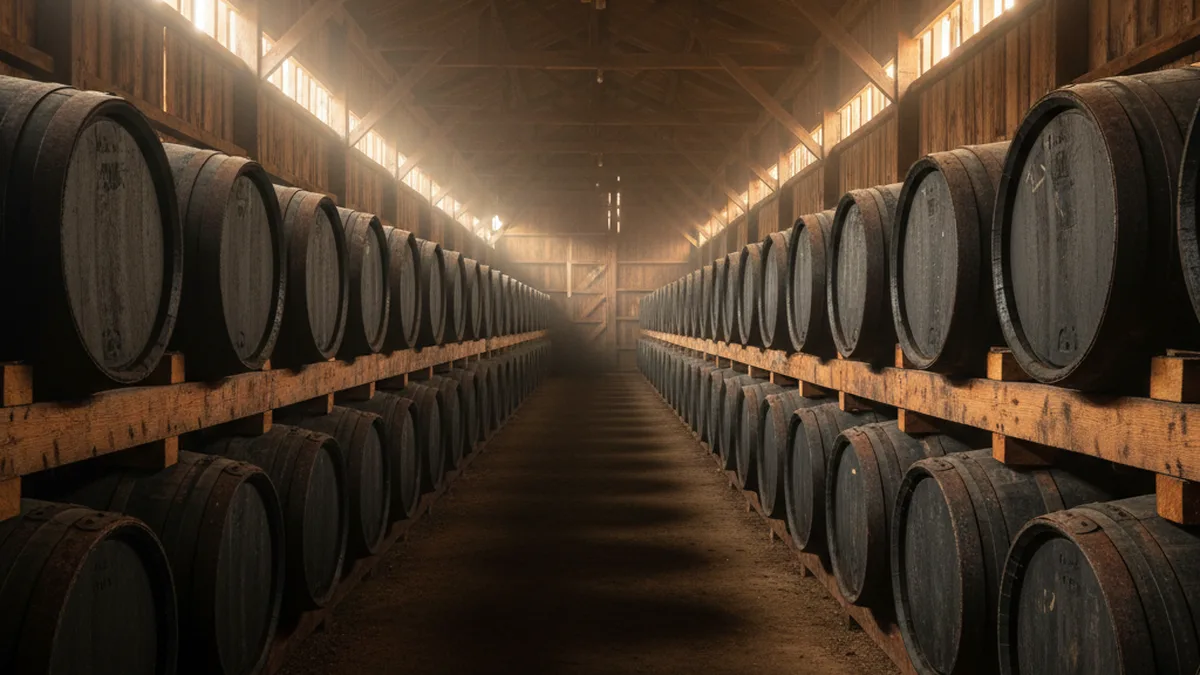
This is the rule that truly sets bourbon apart from every other whiskey. The spirit must be aged in brand-new, charred oak containers. Scotch, Irish whiskey, and most other world whiskeys routinely reuse barrels. Bourbon does not. A fresh barrel means maximum extraction of flavor compounds from the wood: vanillin for vanilla notes, lignin for spice, and caramelized wood sugars for toffee and butterscotch.
The level of char matters, too. Most distillers use a “No. 4 char,” sometimes called an “alligator char” for the deep, cracked texture it creates on the inside of the barrel. This charred layer acts as a natural filter, stripping harshness from the raw spirit while infusing it with color and complexity.
Distillation and Proof Requirements
Bourbon must be distilled to no more than 160 proof (80% ABV). This cap ensures the distillate retains flavor from the grains rather than being stripped to a neutral spirit. It must enter the barrel for aging at no more than 125 proof (62.5% ABV), and it must be bottled at a minimum of 80 proof (40% ABV). These guardrails protect the spirit’s character at every stage of production.
No Artificial Additives
Unlike some other whiskey categories, bourbon cannot contain any added coloring, flavoring, or blending agents. What you taste in a glass of bourbon is entirely the product of the grain, the water, the yeast, and the barrel. Nothing else.
Bourbon vs. Other Whiskeys: How It Compares
If you have ever wondered what separates bourbon from scotch, rye, or Irish whiskey, the answer lies in the rules. Each whiskey category has its own legal standards. Here is how bourbon stacks up against the competition. For a deeper breakdown, see our full guide on bourbon vs. whiskey vs. scotch.
| Requirement | Bourbon | Scotch Whisky | Rye Whiskey | Irish Whiskey |
|---|---|---|---|---|
| Country of Origin | USA | Scotland | USA or Canada | Ireland |
| Primary Grain | ≥51% Corn | Malted Barley | ≥51% Rye | Various (barley common) |
| Barrel Type | New, charred oak | Used oak (often ex-bourbon) | New, charred oak | Used oak |
| Minimum Aging | No minimum (2 yrs for “straight”) | 3 years | No minimum (2 yrs for “straight”) | 3 years |
| Additives Allowed | None | Caramel coloring (E150a) | None | Caramel coloring |
The new-barrel requirement is the biggest differentiator. Because bourbon always gets a fresh barrel, it develops bold oak-driven flavors faster than spirits aged in used wood. This is also why bourbon barrels are in such high demand by scotch, rum, and tequila producers around the world for finishing their own spirits.
What Does Bourbon Taste Like?
Bourbon’s flavor profile is remarkably consistent thanks to its strict production rules, but there is plenty of room for variation depending on the mash bill, aging conditions, and the distiller’s approach. Here are the core flavors you can expect:
- Vanilla and Caramel: The hallmark of new charred oak aging. These sweet, inviting notes form the backbone of almost every bourbon.
- Oak and Spice: Warm cinnamon, nutmeg, and clove from the barrel’s lignin and tannins. Higher-rye bourbons will lean more heavily into pepper and baking spice.
- Butterscotch and Toffee: Caramelized wood sugars that develop during the charring process contribute rich, dessert-like sweetness.
- Stone Fruit and Citrus: Riper, more nuanced bourbons often show cherry, dried apricot, or orange peel, especially with longer aging.
- Toasted Grain and Bread: A direct contribution from the corn-heavy mash bill, often showing up as a warm, comforting bready note.
Mary Dowling’s own lineup illustrates this range beautifully. The Winter Wheat Bourbon leans into a softer, sweeter profile with toasted barrel notes, while the Tequila Barrel Finished Bourbon brings bright, herbaceous complexity from its time in reposado tequila casks.
Common Bourbon Terms You Should Know
Bourbon labels can be confusing. Here are the key terms that actually mean something, backed by legal definitions:
- Straight Bourbon: Aged for a minimum of two years with no added coloring or flavoring. If aged less than four years, the age must be stated on the label.
- Bottled-in-Bond: Produced by a single distiller at a single distillery in a single distilling season, aged at least four years in a federally bonded warehouse, and bottled at exactly 100 proof. This is the gold standard of transparency.
- Single Barrel: Drawn from one individual barrel rather than a blend of many, meaning every bottle is unique. Mary Dowling offers a Single Barrel Program for select partners seeking cask-strength exclusivity.
- Cask Strength (Barrel Proof): Bottled directly from the barrel without adding water to lower the proof. These are typically bolder, more intense expressions.
- Small Batch: A loosely defined term meaning the bourbon was blended from a relatively small number of barrels. There is no legal minimum or maximum.
- Wheated Bourbon: Uses wheat instead of rye as the secondary grain, producing a softer, gentler flavor profile.
How to Enjoy Bourbon
There is no wrong way to drink bourbon, only your way. That said, here are the most common approaches:
Neat
Poured at room temperature with nothing added. This is the best way to taste a bourbon’s full character. Take a small sip, let it coat your palate, and pay attention to how the flavors develop.
With Water or Ice
A few drops of water can open up a bourbon’s aromatics, softening the alcohol burn and revealing hidden flavors. A large ice cube chills the spirit gently without diluting it too quickly. Start neat, then experiment.
In Cocktails
Bourbon is the foundation of some of the world’s greatest cocktails: the Old Fashioned, the Mint Julep, the Whiskey Sour, and the Manhattan. Its natural sweetness and oak backbone make it an incredibly versatile mixing spirit. Browse our collection of bourbon cocktail recipes for inspiration.
A Brief History of Bourbon
Bourbon’s origins trace back to the late 18th century when settlers in Kentucky began distilling their surplus corn. The region’s limestone water, which naturally filters out iron while adding calcium, proved ideal for whiskey production. By the 1800s, bourbon had become America’s most celebrated spirit.
But its path was not always smooth. Prohibition (1920-1933) devastated the industry, shutting down nearly every distillery in the country. One of the few people who fought to keep the craft alive was Mary Dowling, a Kentucky distillery owner who was ultimately convicted for continuing to produce whiskey during the ban. Her story, largely lost to history for nearly a century, represents the resilience and defiance that define bourbon’s character. You can read the full account in The Mother of Bourbon, the Amazon Best Seller by Kaveh Zamanian and Eric Goodman.
In 1964, Congress declared bourbon a “distinctive product of the United States,” cementing its legal identity and protecting it on the world stage.
Frequently Asked Questions
Does bourbon have to be made in Kentucky?
No. Bourbon must be made in the United States, but there is no requirement that it come from Kentucky. That said, Kentucky produces approximately 95% of the world’s bourbon supply thanks to its ideal climate, limestone water, and deep-rooted distilling tradition.
Is bourbon gluten free?
The distillation process removes gluten proteins from the final spirit, so bourbon is generally considered gluten free. However, individuals with severe celiac disease should consult their physician, as trace amounts may remain in some products.
What is the difference between bourbon and whiskey?
All bourbon is whiskey, but not all whiskey is bourbon. Bourbon is a specific type of whiskey that must meet strict legal requirements: made in the USA, at least 51% corn, aged in new charred oak barrels, and free of additives. For the full comparison, see our guide to bourbon vs. whiskey vs. scotch.
How long does bourbon need to age?
There is no minimum aging requirement for bourbon. However, to be labeled “straight bourbon,” it must age for at least two years. Most premium bourbons are aged four to twelve years, though some expressions age much longer.
Why is bourbon sweet?
Bourbon’s sweetness comes from two sources: the high corn content in the mash bill and the caramelized sugars extracted from new, charred oak barrels during aging. No sugar or sweetener is added.
Ready to Taste the Difference?
Now that you know what bourbon is, how it is made, and what sets it apart, the best next step is to experience it firsthand. Explore the Mary Dowling Bourbon collection and taste a spirit that honors the legacy of the Mother of Bourbon in every sip.

Justin Pakdaman is the Marketing Director for Mary Dowling Whiskey Co., where he leads brand storytelling, digital strategy, and consumer engagement. Justin has years of experience building premium spirits brands.