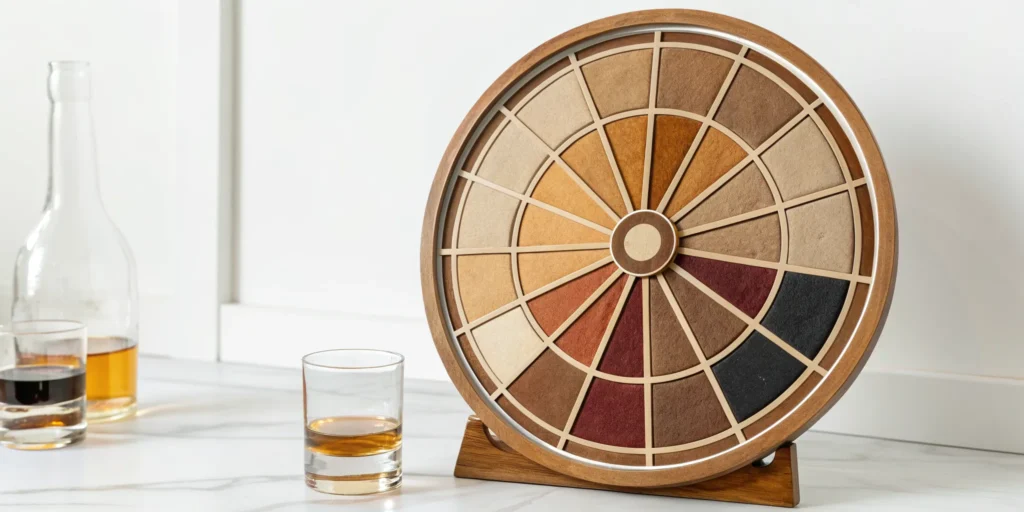
Walking into a whiskey bar or sharing a bottle with friends should be exciting, not intimidating. But sometimes, finding the right words to describe what you’re tasting can feel like a test. That’s where the bourbon flavor wheel comes in. Think of it less as a rigid chart and more as a friendly guide designed to help you trust your own palate. It provides a shared vocabulary that empowers you to pinpoint flavors, from toasted marshmallow to black cherry, and share your experience with confidence. It’s a simple tool that makes the world of bourbon more accessible and enjoyable for everyone.
Key Takeaways
- Translate taste into words: The Bourbon Flavor Wheel is a practical tool that helps you identify and articulate the specific flavors and aromas in your whiskey, moving your descriptions beyond simple terms like ‘smooth’ or ‘strong’.
- Start general, then get specific: The most effective way to use the wheel is to begin in the center with broad categories like ‘sweet’ or ‘woody’ and follow the path outward to pinpoint more precise notes like ‘caramel’ or ‘toasted oak‘.
- Sharpen your palate with practice: The best way to improve your tasting skills is to actively use the wheel. Set up a focused tasting, compare different bourbons side-by-side, and notice how the flavors interact to better understand what you enjoy.
What Is the Bourbon Flavor Wheel?
Have you ever taken a sip of bourbon and thought, “I know I’m tasting something specific, but I can’t quite name it”? You’re not alone. The Bourbon Flavor Wheel is a visual map designed to help you find the right words for the complex aromas and tastes in your glass. Think of it as your personal translator for the language of bourbon. Created by the Council of Whiskey Masters, it provides a structured way to explore the spirit’s incredible depth, moving from general categories to very specific notes. It’s a tool that turns a simple drink into a full sensory experience, helping you appreciate the craft behind every bottle.
Why It’s an Essential Tool for Bourbon Lovers
The real magic of the flavor wheel is how it organizes the vast world of bourbon tastes into a clear, intuitive format. Instead of a random list, the circular design shows how different flavors can blend and relate to one another. This helps you pinpoint specific notes while also understanding how they create a balanced, harmonious profile. The Council of Whiskey Masters notes that most flavors on the wheel are desirable as long as they aren’t overpowering, which encourages you to appreciate the subtlety in your bourbon. It’s an indispensable guide for anyone looking to move beyond simply “liking” a bourbon to truly understanding why they like it.
The Story Behind the Wheel
Like any great invention, the Bourbon Flavor Wheel was born from a genuine need. A team of whiskey and bourbon experts realized there wasn’t a universal, comprehensive tool for tasters to use. They wanted to create a common language that could be shared by everyone from casual enthusiasts to seasoned professionals. The result of their collaboration is the wheel we use today. It has since become a cornerstone of the Council’s certification programs, helping to train the next generation of experts. This history reminds us that developing your palate is a skill, and the wheel is a trusted guide developed by people who are deeply passionate about the spirit.
What Makes the Bourbon Wheel Unique?
What truly sets the Bourbon Flavor Wheel apart is its thoughtful, user-first design. It was inspired by the creator’s own challenge in putting words to the flavors they were experiencing. This personal starting point makes the wheel incredibly approachable and educational. It’s not just for experts; it’s for anyone who wants to enhance their tasting experience. The wheel’s unique structure guides you from broad impressions to precise descriptors, empowering you to identify notes you might have otherwise missed. It gives you the confidence to talk about what you’re tasting, whether you’re sharing a dram with friends or writing your own tasting notes.
How to Read the Bourbon Flavor Wheel
Think of the Bourbon Flavor Wheel as a map for your palate. It’s a visual guide that helps you identify and name the complex aromas and tastes you experience in a glass of whiskey. At first glance, it might seem a little overwhelming, but it’s designed to be intuitive. The wheel organizes common bourbon notes, from broad categories in the center to highly specific descriptors on the outer edges. Using it helps you move beyond saying a bourbon is simply “good” or “smooth” and start articulating exactly what makes it special. It’s a fantastic tool for building your tasting confidence and deepening your appreciation for the spirit Mary Dowling perfected.
Breaking Down the Core Flavor Categories
The flavor wheel is organized into several core categories that act as your starting point. You’ll find major groups like fruit, spice, wood, and grain. These are the big, foundational flavors that come from the mash bill, the distillation process, and, of course, the time spent aging in a barrel. The Council of Whiskey Masters breaks it down even further into about 16 main aspects. For example, within the “fruit” category, you might find sub-groups like citrus, dried fruit, or tropical fruit. This structure gives you a framework, helping you pinpoint whether that fruity note you’re tasting is more like a baked apple or a fresh orange peel.
Working from the Inside Out
The best way to approach the wheel is to start in the center and work your way out. The innermost circle contains the most general flavor categories. When you first nose or sip your bourbon, try to identify one of these broad impressions. Do you get a general sense of sweetness? Or maybe a hint of spice? Once you’ve landed on a general category, follow it to the next ring, which offers more specific options. If you picked up on “wood,” the next step might be to decide if it’s more “toasted” or “charred.” The wheel is round because flavors often blend together, so let your senses guide you from a general feeling to a specific note.
From General Impressions to Specific Notes
As you move toward the outer edges of the wheel, you’ll find very precise descriptors, like toasted marshmallow, black pepper, or leather. Don’t feel pressured to find every single one. The goal isn’t to check off boxes but to build your sensory vocabulary. It’s also important to remember that balance is key; most of these flavors are considered desirable when they aren’t too overpowering. Trust your own palate. If you taste something that isn’t on the wheel, that’s perfectly fine. Your tasting experience is unique to you, and this tool is simply here to help you put words to it.
Understanding How Flavors Interconnect
The true magic happens when you start to see how different flavors connect and play off one another. A single bourbon can have notes that span multiple categories. For instance, the oaky notes from the barrel often bring along sweet flavors like vanilla, caramel, and brown sugar. Similarly, a high-rye mash bill might deliver spicy notes of cinnamon and clove that are balanced by sweeter, grain-forward hints of cornbread. Exploring how these notes weave together is what makes tasting so rewarding. You can see this complexity in our own award-winning whiskeys, where unique barrel finishes introduce new layers that interact with the bourbon’s original character.
Putting the Flavor Wheel into Practice
Now that you understand what the flavor wheel is, let’s get to the fun part: putting it to use. Think of it as your personal guide on a flavor journey. With a little practice, you’ll be identifying notes you never knew existed. Here’s how to get started.
Create the Perfect Tasting Setup
To give your bourbon a fair shot, you need the right environment. A focused setting helps you explore and identify the different flavors hiding in your glass. Start by pouring a measure of your chosen bourbon into a proper tasting glass, like a Glencairn, which is designed to concentrate the aromas. Find a quiet, well-lit spot free from strong scents like candles or cooking smells that could interfere with the tasting. Keep a glass of water and some plain crackers or bread nearby to cleanse your palate between sips. This simple setup creates a neutral canvas, allowing the bourbon’s true character to shine through.
A Step-by-Step Guide to Developing Your Palate
Developing your palate is all about paying attention. Begin by observing the bourbon’s color and viscosity. Give the glass a gentle swirl and take a light sniff, keeping your mouth slightly open. What do you smell? Now, take a small sip and let it coat your tongue. As you taste, consult the flavor wheel. Start in the center with broad categories like “Grain” or “Fruit,” and work your way out to more specific notes. The wheel helps you connect a general impression, like sweetness, to a specific descriptor, like caramel or honey. Remember that most flavors are best when they aren’t too strong; balance is what you’re looking for as you practice your tasting skills.
Articulate Flavors Like an Expert
The flavor wheel doesn’t just help you identify notes; it gives you the vocabulary to talk about them. But to truly evaluate a bourbon’s quality, you can go a step further. Professionals often consider five key elements: Complexity, Balance, Expressiveness, Typicity, and Character. Complexity refers to how many layers of flavor you can find. Balance is how well those flavors work together. Expressiveness is how bold and clear the notes are. Typicity is how well it represents the classic bourbon style. And Character? That’s the unique personality that makes a whiskey memorable, much like the spirit of Mary Dowling herself.
Compare Bourbons Side-by-Side
One of the best ways to sharpen your palate is by tasting two or more bourbons next to each other. This highlights their unique differences and helps you understand your own preferences. Pour small amounts of different expressions, like our Tequila Barrel and Double Oak Barrel finishes, and taste them in succession. Use the flavor wheel to pinpoint what sets them apart. You can group the flavors into categories like fruit, wood, grain, and spice to organize your thoughts. Does one have a stronger vanilla note? Is the other more peppery on the finish? This comparative approach turns tasting into an active discovery.
Common Flavor Profiles to Identify
As you start using the flavor wheel, you’ll begin to recognize recurring notes across different bourbons. These common profiles are the building blocks of your tasting vocabulary. Think of them as major landmarks on a map; once you can spot them, you can appreciate the unique journey each bourbon takes you on. Identifying these core flavors is the first step to understanding the story behind the spirit, from the grains used in the mash bill to the time it spent aging in the barrel. Let’s walk through some of the most prominent flavor families you’ll encounter.
Exploring Sweet and Fruity Notes
Sweetness is a hallmark of bourbon, thanks largely to its corn-based mash bill. But this goes far beyond simple sugary notes. You might pick up rich caramel, warm vanilla, or even decadent chocolate, often developed during the barrel aging process. Alongside these are a wide array of fruity flavors, which can be a direct result of the specific yeast strains used during fermentation. You might taste bright notes of lemon or apple, deeper flavors of cherry and blackberry, or even jammy notes like raisin. The Bourbon Tasting Flavor Wheel is a great guide for pinpointing these specific tastes.
Uncovering Spicy and Woody Tones
Many bourbons have a delightful spicy character that adds warmth and complexity. These aren’t hot spices, but rather the fragrant, sweet spices you’d find in a bakery, like cinnamon, clove, and nutmeg. These notes often come from the grains, especially if there’s a high rye content in the mash bill. The woody flavors are a direct gift from the charred oak barrels where the bourbon ages. You might identify notes of toasted oak, cedar, or even a hint of charcoal, which can sometimes present as rich flavors like crème brûlée or cola, adding a beautiful depth to the spirit.
Finding Grainy and Nutty Characteristics
The grains that form the foundation of bourbon also leave their distinct mark on the final flavor. You can often taste the influence of the mash bill directly, with notes of sweet cornbread, hearty rye bread, or a gentle maltiness. These grainy notes are a reminder of bourbon’s agricultural roots. Alongside them, you may find a variety of nutty flavors. These can range from peanut and almond to richer notes like hazelnut or marzipan. These characteristics can emerge from different stages of the production process, adding another interesting layer to your tasting experience.
Detecting Floral and Herbal Undertones
While not always the most forward flavors, floral and herbal notes can add a delicate and sophisticated touch to a bourbon. These more subtle characteristics are often shaped by the yeast during fermentation. You might pick up the gentle scent of rose petals, lavender, or other dried flowers. On the herbal side, you could find notes of fresh mint, licorice, or even black tea. These undertones can be elusive at first, but learning to identify them is a rewarding part of developing your palate and appreciating the finer details of a well-crafted whiskey.
How to Spot Complex Flavor Combinations
A truly great bourbon is more than just a collection of individual flavors; it’s about how those flavors come together. The best spirits show complexity, meaning they have a wide variety of notes for you to discover. They also have balance, where no single flavor overwhelms the others. As you taste, think about how the sweet notes play against the spicy ones, or how the woody character supports the fruity undertones. This interplay is what gives a bourbon its unique character. The goal isn’t just to name flavors, but to appreciate the harmony and craftsmanship in the glass.
Related Articles
- Wheated Bourbon vs Bourbon: The Key Differences
- Toasted Barrel Wheated Bourbon: A Beginner’s Guide
- The Best Wheated Bourbons for Every Budget
Frequently Asked Questions
Is the Bourbon Flavor Wheel only for experts? Not at all. The flavor wheel was designed for everyone, from people enjoying their first glass to seasoned professionals. Think of it as a helpful guide rather than a strict test. It’s there to give you the words for what you’re already sensing, which helps build your confidence and makes tasting more fun and less intimidating.
What should I do if I taste a flavor that isn’t on the wheel? That’s a great sign that you’re developing a sharp palate. The wheel is a comprehensive guide, but it isn’t exhaustive. Your personal experiences and memories shape how you perceive flavors, so you might pick up on something very specific to you. Trust your senses, and feel free to add your own notes to your tasting experience.
How often should I practice with the flavor wheel to get better at tasting? Consistency is more important than frequency. You don’t need to use it every single time you have a drink, but pulling it out during a dedicated tasting once or twice a month can make a big difference. The goal is to train your brain to connect what you taste with a specific word, and a little regular practice will help make that connection second nature.
Can using the flavor wheel help me find my favorite type of bourbon? Absolutely. As you use the wheel, you’ll start to notice patterns in the bourbons you enjoy most. You might realize you consistently prefer spirits with strong notes of dried fruit and spice, or perhaps you lean toward those with more woody and caramel characteristics. This self-knowledge makes it much easier to select a new bottle you’re likely to love.
Why are flavors like vanilla, caramel, and oak so common in bourbon? These classic notes are a direct result of the bourbon-making process, specifically the aging. By law, bourbon must be aged in new, charred oak barrels. As the whiskey rests in the barrel, it pulls out compounds from the wood that create those signature sweet and woody flavors. It’s a beautiful example of how craftsmanship directly shapes the final taste in your glass.

Justin Pakdaman is the Marketing Director for Mary Dowling Whiskey Co., where he leads brand storytelling, digital strategy, and consumer engagement. Justin has years of experience building premium spirits brands.