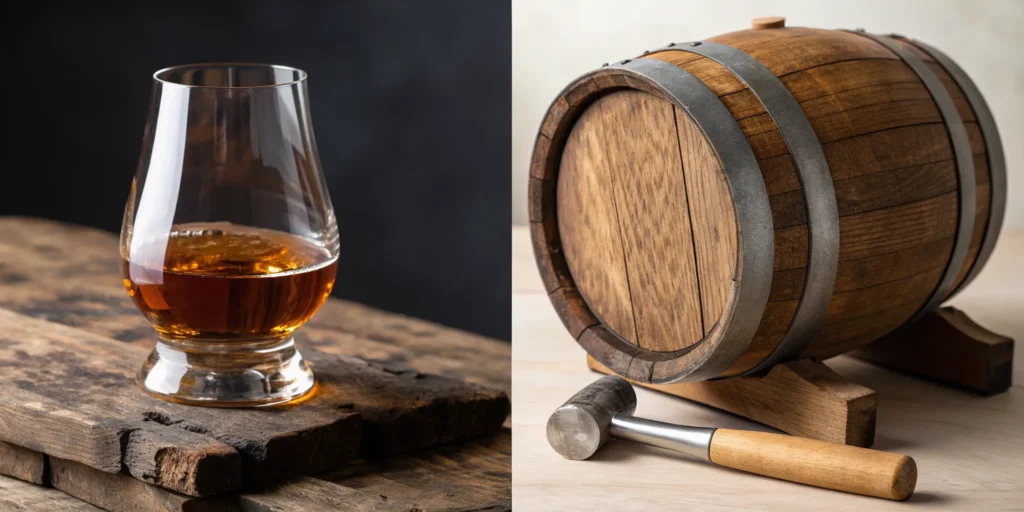
If you want to make a truly exceptional cocktail, you need a whiskey with a strong backbone. A spirit that can stand up to sugar, bitters, and citrus without getting lost. This is where high-proof whiskeys shine. When you see “cask strength” or “barrel proof” on a label, you know you’re getting a spirit with the intensity to anchor a memorable drink. But what do those terms really mean for your home bar? Knowing the practical difference between cask strength and barrel proof helps you select the right bottle, whether you’re sipping it neat or crafting the perfect Old Fashioned with unshakeable character.
Key Takeaways
- Focus on the Process, Not Just the Label: “Cask strength” and “barrel proof” both describe whiskey bottled at its natural, undiluted strength. The difference in terms usually comes down to tradition, with “barrel proof” being common for American whiskeys and “cask strength” used more internationally.
- Tailor Your Tasting with Water: Adding a few drops of water to a high-proof whiskey isn’t a sign of weakness; it’s a pro technique. It can soften the alcohol’s intensity and release new layers of aroma and flavor, allowing you to customize the experience to your palate.
- Build a Bolder Cocktail: The robust character of a high-proof whiskey makes it an ideal foundation for cocktails. Its concentrated flavor profile ensures the spirit stands out against other ingredients, creating a more complex and memorable drink.
What Are Cask Strength and Barrel Proof Whiskeys?
When you explore the world of premium bourbon, you’ll quickly come across terms like “cask strength” and “barrel proof.” These labels signal a whiskey that’s bottled at a higher alcohol content, offering a more intense and direct-from-the-barrel tasting experience. But what do they actually mean, and is there a real difference between them? Understanding these distinctions can help you choose a bottle that truly speaks to the distiller’s craft and the spirit’s journey.
Most whiskeys are diluted with water before bottling to reach a consistent proof, typically somewhere between 80 and 100 proof (40% to 50% alcohol by volume). Cask strength and barrel proof whiskeys skip this step, or at least most of it. They are bottled at or very near the proof at which they exited the barrel after aging. This results in a bolder, more complex spirit that captures the whiskey’s character in its most unadulterated form. Think of it as the difference between listening to a live recording versus a studio-mastered track; both are great, but one is raw and unfiltered. Let’s break down what each term means.
Defining Cask Strength
Cask strength is exactly what it sounds like: whiskey bottled at the strength it came out of the cask (or barrel). It’s often described as whiskey in its purest form because it’s bottled directly from the barrel without any extra water added to lower the proof. Because factors like climate and warehouse location affect how a whiskey ages, the final proof of a cask strength spirit can vary significantly from one barrel to the next. This is the most authentic expression of the whiskey, delivering the full intensity of flavors developed during its time in the wood. It’s a direct line to the heart of the spirit.
Defining Barrel Proof
So, how is barrel proof different? In practice, it’s usually not. The terms “barrel proof” and “cask strength” are often used interchangeably to describe a whiskey that hasn’t been diluted after aging. Both signal that the spirit’s strength is what it was when it came out of the barrel. While some distilleries might have their own internal nuances for why they choose one term over the other, for you as a whiskey drinker, they both promise the same thing: a high-proof, intensely flavorful pour. The key takeaway is that the main difference between these and standard whiskeys is whether water is added after maturation.
Where Does Full Proof Fit In?
Just when you think you have it figured out, the term “full proof” enters the conversation. Unlike cask strength or barrel proof, full proof doesn’t refer to the whiskey’s strength when it exits the barrel. Instead, it refers to the proof at which the spirit entered the barrel for aging. After maturation, the distiller adds just enough water to bring the whiskey back down to its original entry proof. It’s a subtle but important distinction. What makes it even more confusing is that the term lacks a clear, agreed-upon definition, as the U.S. government doesn’t regulate what “full proof” means, so its use can be flexible depending on the brand.
Are Cask Strength and Barrel Proof Really Different?
Let’s get straight to it: are these terms just different words for the same thing? For the most part, yes. Both “cask strength” and “barrel proof” tell you that the whiskey in the bottle is at the same proof it was when it left the aging barrel. No water has been added to dilute it, which is why these whiskeys pack such a flavorful punch. It’s whiskey in its most direct and unaltered form, straight from the wood.
However, the story doesn’t end there. The choice between “cask strength” and “barrel proof” often comes down to tradition, geography, and a distillery’s specific philosophy. While they describe the same process, the context behind the words can give you a clue about the whiskey’s origin and style. Think of it less as a strict rule and more as a dialect. Understanding this language helps you better appreciate what’s in your glass and the story behind it.
Why the Terms Are Often Used Interchangeably
The main reason you see these terms used as synonyms is that they describe the exact same production method. After a whiskey has aged for years, soaking up all that wonderful flavor and color from the oak, it’s ready for bottling. Most whiskeys are diluted with water at this stage to reach a consistent, standard proof (usually 80 proof). Cask strength and barrel proof whiskeys skip this step entirely. They are bottled at their natural, potent strength, which can vary from barrel to barrel. This commitment to bottling an unfiltered spirit is what unites both terms.
How Distillery Preferences Shape the Language
Here’s where the nuance comes in. The term you see on the label is often a nod to geography and tradition. “Cask strength” is the preferred term in Scotland and across many international whiskey markets. If you’re holding a bottle of Scotch, Irish whiskey, or Japanese whisky, you’ll likely see “cask strength.” On the other hand, “barrel proof” is the all-American term, deeply rooted in the world of bourbon and rye. This regional preference is a simple way distillers signal their heritage and the style of whiskey they produce. It’s a small detail, but for enthusiasts, it’s part of the whiskey’s identity.
The Absence of a Legal Definition
It’s important to know that neither “cask strength” nor “barrel proof” are legally defined terms in the United States. The government doesn’t regulate their use, so it’s up to the distillers to be honest. This is an industry standard, a promise from the maker to the drinker that the whiskey is uncut and authentic. While the vast majority of distillers honor this understanding, the lack of a strict legal rule means you’re placing your trust in the brand’s reputation. It’s a good reminder to choose whiskeys from producers who are transparent about their process and dedicated to their craft.
What Determines a Whiskey’s Final Proof?
A whiskey’s final proof is a direct reflection of its journey. From the moment it enters the barrel to the day it’s bottled, its character and strength are constantly evolving. Think of it less as a fixed number and more as the final chapter in a story written by time, climate, and the wood of the barrel itself. Several key factors shape this outcome, turning each barrel into a unique environment.
Understanding these elements helps you appreciate why one high-proof whiskey can be so different from another. It’s not just about the heat; it’s about the history of how that spirit matured. The process is a delicate dance between the liquid and its surroundings, where everything from warehouse temperature to the barrel’s specific location plays a part in the final, delicious result.
How Aging Changes Alcohol Content
Time in a barrel does more than just add color and flavor; it also changes the whiskey’s strength. The climate where a whiskey ages plays a huge role in this transformation. In a dry environment, water molecules are smaller and evaporate through the barrel’s wood more quickly than the larger alcohol molecules. This process concentrates the alcohol, causing the proof to rise over time. Conversely, in a more humid climate, alcohol may evaporate at a faster rate than water, which can cause the proof to drop. This is why the same whiskey aged in different locations can end up with a completely different final proof.
The Impact of the Angel’s Share
You’ve likely heard distillers talk about the “angel’s share.” This isn’t just a poetic term; it’s a real phenomenon that directly impacts a whiskey’s proof. The angel’s share is the portion of whiskey that evaporates through the porous oak barrel during maturation. As this liquid vanishes into the heavens, the remaining spirit becomes more concentrated. This evaporation is a key part of how whiskey develops its deep, complex flavors and, as mentioned, it often leads to a higher concentration of alcohol in the liquid left behind. It’s a necessary sacrifice for a richer, more robust final product.
Why Proof Varies Between Barrels
No two barrels are exactly alike, which means the whiskey inside them won’t be either. Even barrels filled on the same day with the same spirit and aged side-by-side in a rickhouse will mature differently. Tiny variations in the wood grain, the char level, and even the barrel’s specific location (a top rack gets more heat than a bottom one) create unique microclimates. This is why brands that bottle their whiskey straight from the barrel often have a different proof for each batch. It’s not an inconsistency; it’s a sign that you’re getting an authentic taste of that specific barrel’s journey.
Single Barrel vs. Blended Batches
When you see “cask strength” or “barrel proof” on a label, it’s important to know it doesn’t automatically mean the whiskey came from a single barrel. Distillers can create a cask strength whiskey by blending the contents of multiple barrels from the same batch. This helps create a more consistent flavor profile for the release while still bottling the spirit without adding water. A “single barrel cask strength” whiskey, however, is the undiluted product of one specific barrel. These bottles offer a truly unique snapshot in time, showcasing the distinct character of that individual cask, much like our own meticulously crafted whiskeys.
How to Drink High-Proof Whiskey
Tasting a high-proof whiskey is an experience that puts you right in the rickhouse, sampling a spirit in its purest form. But its intensity can be a little surprising if you’re not prepared. The key is to approach it with curiosity and a willingness to experiment. Whether you’re a seasoned enthusiast or just starting to explore bolder spirits, these simple techniques will help you appreciate every complex note a high-proof whiskey has to offer. It’s not about rules; it’s about finding what works for you and enjoying the spirit on your own terms.
Prepare for Intense Flavors
The first thing to remember is that at barrel proof, everything is more concentrated. The aromas are richer, the flavors are deeper, and the finish is longer. This is the whiskey as the distiller intended it, with nothing taken away. To get acquainted with its character, start with a small pour. Give it a gentle swirl in the glass and take a moment to notice the aroma before your first sip. Take a very small taste, letting it coat your tongue. You’ll likely notice a warm, tingling sensation from the alcohol, followed by a wave of complex flavors. This intensity is where the magic lies, showcasing the full spectrum of notes from the grain and the barrel.
Add Water to Unlock New Notes
If the initial heat is a bit much, don’t be afraid to add a little water. This is a classic technique used by master blenders and whiskey lovers around the world. Adding a few drops of room-temperature water can soften the alcohol’s edge and help release aromatics and flavors that were hiding. Use a dropper or a straw to add just one or two drops at a time. Swirl the glass, take another sniff, and taste again. You might discover new notes of fruit, spice, or oak that weren’t apparent before. Continue adding drops until you find the perfect balance for your palate.
Mix Cocktails with Confidence
Some people feel that using a high-proof whiskey in a cocktail is a waste, but I see it differently. A bold, uncut spirit is the perfect foundation for a truly memorable drink. Its robust character ensures the whiskey’s flavor won’t get lost behind other ingredients like bitters, sugar, or citrus. An Old Fashioned or a Manhattan made with a barrel-proof bourbon is a game-changer, as the spirit’s deep oak and spice notes shine through beautifully. Think of it as giving your favorite cocktail a stronger backbone and a more complex personality. You can find some great inspiration in our list of whiskey recipes.
A Quick Note on Sipping Safely
It’s important to remember what “high-proof” really means. A typical cask strength whisky has an alcohol content between 50% and 65% ABV, which is significantly higher than the standard 40%. This isn’t meant to intimidate you, but to encourage mindful sipping. Savor your drink slowly and consider keeping a glass of water nearby to stay hydrated. A high-proof whiskey is a spirit to be contemplated and enjoyed over time, not rushed. By respecting its strength, you give yourself the space to appreciate the incredible craftsmanship in every drop.
How to Choose the Right High-Proof Whiskey
Choosing a high-proof whiskey is an exciting step in your tasting journey. It’s your chance to experience a spirit in one of its purest forms, full of the character it developed in the barrel. But with so many options, how do you pick the right one? It really comes down to what you enjoy and what you’re looking for in a drink. Think about your personal taste, the occasion, and whether you’re sipping for the moment or adding a special bottle to your collection.
Match the Whiskey to Your Palate
The best way to start is by thinking about your flavor preferences. If you love bold, intense flavors, a high-proof whiskey is right up your alley. These spirits are bottled with minimal to no dilution, offering a powerful and complex tasting experience. They are perfect for anyone who likes to experiment. One of the best parts about a cask strength or barrel proof whiskey is that you are in control. You can add a few drops of water to gently lower the proof, which can open up new layers of aroma and flavor. It’s a fantastic way to see how the spirit evolves in your glass and tailor it perfectly to your palate.
Understand the Price Difference
You’ve probably noticed that high-proof whiskeys often come with a higher price tag. There’s a good reason for that. With an alcohol content that can range from 50% to over 65%, these whiskeys are significantly more concentrated than their standard-proof counterparts. You’re essentially getting more of the original spirit and less water. This price reflects the quality and intensity of the whiskey. Think of it as paying for the “least adulterated” version of the distiller’s creation. It’s a direct taste of the whiskey as it was in the barrel, showcasing the meticulous craftsmanship and aging process that went into every drop.
Know When to Go High-Proof
High-proof whiskeys are ideal for moments when you want to truly savor and explore a spirit. They offer a deep dive into the full spectrum of a whiskey’s flavor profile, making them perfect for a focused tasting session. While you can certainly enjoy one anytime, they shine on occasions where the whiskey is the star of the show. They also make incredible cocktails. A higher proof means the whiskey’s character won’t get lost behind other ingredients, allowing it to stand firm in classic recipes like an Old Fashioned or a Boulevardier. It’s your secret weapon for creating more robust and flavorful whiskey cocktails.
Build Your Collection with Intention
For those who enjoy curating a home bar, high-proof whiskeys are excellent additions. Many are released as limited editions or single barrel offerings, making them unique finds that are especially appealing to collectors. When you’re looking to add a new bottle, consider one with a compelling backstory. A whiskey born from resilience, like those inspired by Mary Dowling’s own story, brings more than just great flavor to your shelf; it brings a piece of history. Building your collection with intention means choosing bottles that not only taste exceptional but also tell a story you’ll be proud to share.
Related Articles
- What Is Cask Strength Bourbon?
- Cask Strength vs Barrel Proof
- What Is Single Barrel Cask Strength? A Guide
Frequently Asked Questions
So, is there any real difference between ‘cask strength‘ and ‘barrel proof’? For all practical purposes when you’re choosing a bottle, no. Both terms mean the whiskey was bottled at the proof it came out of the barrel, without being diluted with water. The main distinction is usually geographical tradition. “Barrel proof” is the term you’ll typically see on American whiskeys like bourbon and rye, while “cask strength” is more common for Scotch and other world whiskeys.
Besides being stronger, does high-proof whiskey actually taste better? “Better” is always a matter of personal preference, but high-proof whiskey definitely offers a more intense and complex flavor experience. Because it hasn’t been watered down, you get the full, concentrated character of the spirit as it was in the barrel. This means the flavors are bolder, the texture is often richer, and the finish can be much longer. It’s a very direct and pure expression of the distiller’s craft.
Will adding water to my barrel proof whiskey ruin the flavor? Not at all. In fact, adding a few drops of water is a technique used by master distillers and seasoned whiskey drinkers alike. A little water can soften the initial heat from the high alcohol content, which in turn allows more subtle aromas and flavors to come forward. It’s a great way to customize the drink to your own palate and see how the whiskey’s character evolves in the glass.
Why do cask strength and barrel proof whiskeys typically cost more? The higher price tag comes down to concentration. When a whiskey is bottled at a standard 80 or 90 proof, a significant portion of the liquid in the bottle is water that was added after aging. With a high-proof whiskey, you are getting much more of the actual aged spirit and less added water. You’re paying for a less diluted, more potent product that reflects the full result of its time in the barrel.
Is it a waste to use such a premium, high-proof whiskey in a cocktail? Absolutely not. Using a high-proof whiskey is one of the best ways to create a truly exceptional cocktail. Its robust and concentrated flavor profile provides a strong backbone that won’t get lost among other ingredients like mixers, bitters, or citrus. This ensures the whiskey’s character remains front and center, resulting in a drink with incredible depth and complexity.

Justin Pakdaman is the Marketing Director for Mary Dowling Whiskey Co., where he leads brand storytelling, digital strategy, and consumer engagement. Justin has years of experience building premium spirits brands.