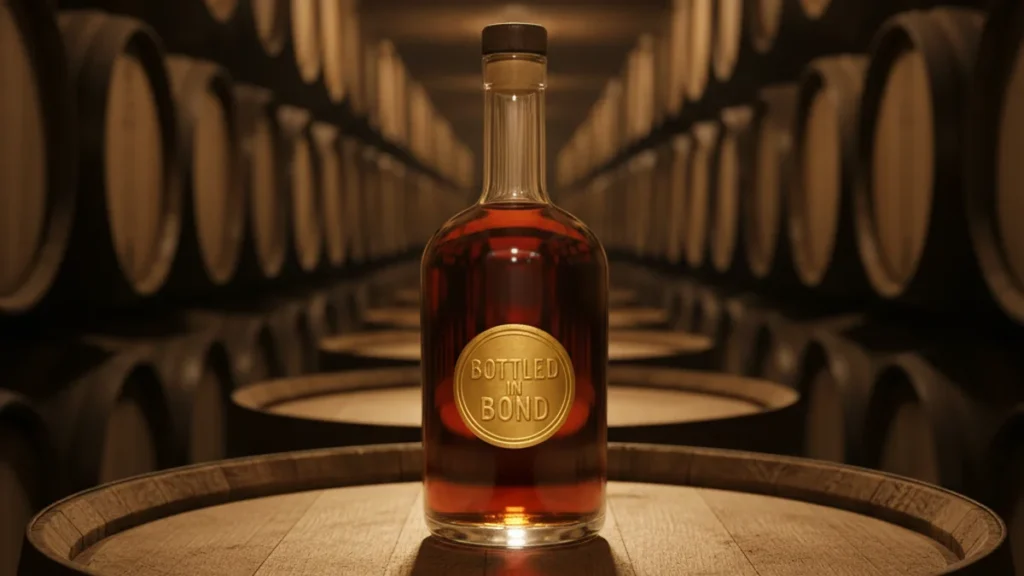
Key Takeaways
- Bottled in bond is a federal quality standard, not a marketing term: The Bottled-in-Bond Act of 1897 is the oldest consumer protection law for spirits in the United States, and it guarantees that the whiskey in your glass meets four strict government requirements.
- Four requirements define bonded bourbon: It must be the product of a single distillery, distilled during a single distilling season, aged at least four years in a federally bonded warehouse, and bottled at exactly 100 proof (50% ABV).
- The “bottled in bond” label means transparency: Every bonded bottle must identify the distillery where it was made and where it was bottled, so you always know exactly what you’re drinking.
- Understanding how bourbon is made makes bonded bourbon even more impressive: Meeting all four requirements simultaneously demands discipline, consistency, and confidence from the distiller.
What Does Bottled in Bond Mean?
“Bottled in bond” is a designation that tells you a spirit has met the strict requirements of the Bottled-in-Bond Act of 1897. It is not a style of bourbon. It is not a flavor profile. It is a federally regulated quality standard enforced by the U.S. government, and it’s the oldest such standard for American spirits still in use today.
When you see “bottled in bond” or “bonded” on a bourbon label, you can be certain of four things about the whiskey inside that bottle. Each requirement exists to guarantee authenticity and quality, and together they form one of the most demanding standards in the spirits world.
The Four Requirements of Bottled-in-Bond Bourbon
- Single distillery: The bourbon must be the product of one distillery, in one distilling season. This ensures a consistent, identifiable product rather than a blend from multiple sources.
- Single distilling season: All the bourbon in the bottle must have been distilled during one distilling season (January to June, or July to December). No mixing between seasons.
- Aged at least four years: The bourbon must spend a minimum of four years aging in a federally bonded warehouse under government supervision. There is no shortcut.
- Bottled at exactly 100 proof: The bourbon must be bottled at precisely 100 proof (50% ABV). Not 99, not 101. Exactly 100. This eliminates any guesswork about what’s in the bottle.
The label must also identify the distillery where the spirit was produced and, if different, where it was bottled. This level of transparency was revolutionary in 1897, and it remains one of the most honest designations a bourbon can carry.
The History Behind the Bottled-in-Bond Act of 1897
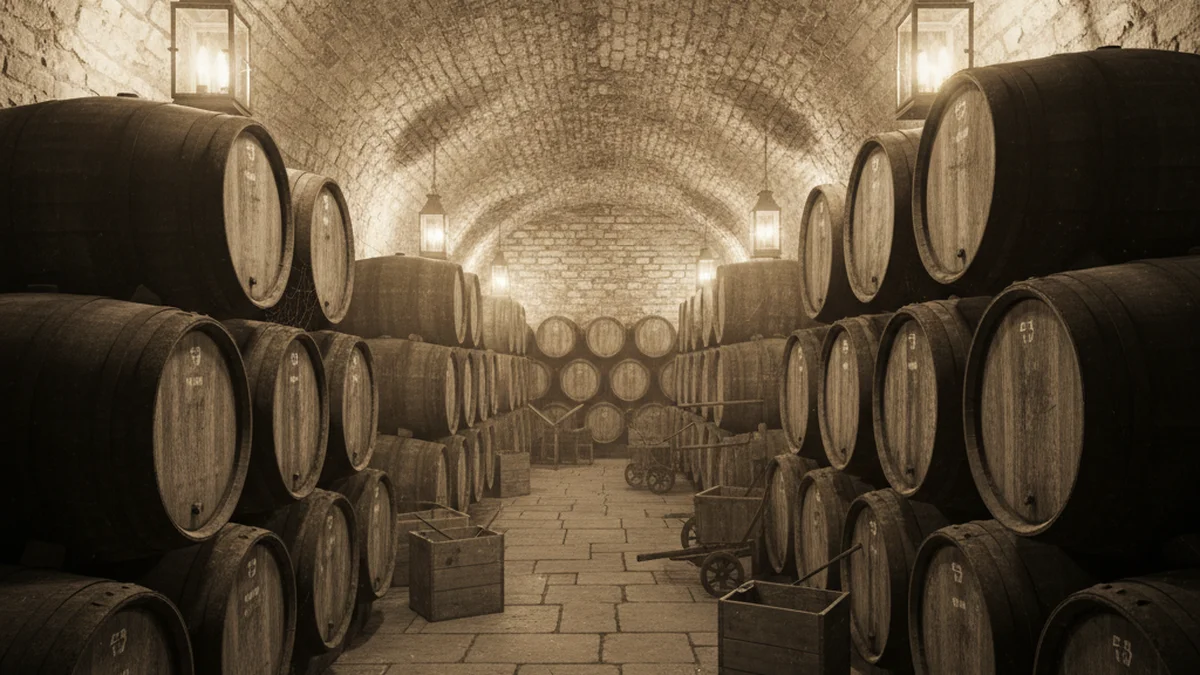
To understand why the Bottled-in-Bond Act matters, you need to understand what American whiskey looked like before it existed. The late 1800s were the Wild West of the spirits industry. There were no federal standards, no labeling requirements, and virtually no accountability. Unscrupulous producers sold adulterated products passed off as genuine whiskey, lacing cheap spirits with additives like tobacco juice, iodine, and even turpentine to simulate the color and flavor of aged bourbon.
Consumers had no way to know what they were actually drinking. Fraud was rampant, and people were getting sick or worse from what was sold to them as whiskey.
Colonel E.H. Taylor Jr. and the Fight for Standards
Colonel Edmund Haynes Taylor Jr., a prominent Kentucky distiller and one of the most influential figures in bourbon history, led the charge for government regulation. Taylor had spent years building his reputation on producing honest, high-quality bourbon, and he was losing business to counterfeiters and fraudsters who could undercut his prices with inferior, adulterated product.
Taylor lobbied Congress relentlessly, arguing that the government had a responsibility to protect consumers and legitimate producers alike. His efforts, along with those of Secretary of the Treasury John G. Carlisle, culminated in the passage of the Bottled-in-Bond Act on March 3, 1897.
A Consumer Protection Law Disguised as a Tax Law
The Bottled-in-Bond Act was technically a tax measure. It allowed distillers to defer tax payments on whiskey while it aged in bonded warehouses under government supervision. But its real genius was in creating a quality standard that consumers could trust. If a bottle carried the “bottled in bond” designation, the government itself had verified that the contents met specific, measurable criteria. It was the first time a consumer could look at a bottle and have a guarantee of what was inside.
This was decades before the Pure Food and Drug Act of 1906 and more than a century before modern food labeling requirements. The bonded designation was, in many ways, the original “seal of approval” for American whiskey.
Bottled in Bond vs. Standard Bourbon: The Comparison
Understanding what sets bonded bourbon apart from standard bourbon becomes clearer when you see the requirements side by side. Here’s how they compare:
| Requirement | Bottled in Bond | Standard Bourbon |
|---|---|---|
| Proof | Exactly 100 proof (50% ABV) | Minimum 80 proof, no maximum (typically 80–130+) |
| Minimum Aging | 4 years in a federally bonded warehouse | No minimum (must be aged, but even seconds count legally) |
| Distillery Source | Single distillery, single distilling season | Can blend from multiple distilleries and seasons |
| Government Oversight | Aged under federal government supervision | No government supervision of aging |
| Label Transparency | Must identify distillery of origin (DSP number) | No requirement to disclose production source |
| Additives | Nothing added except water to reach 100 proof | Nothing added (same for all straight bourbon) |
| Quality Guarantee | Federally regulated standard | Self-regulated by producer |
The difference isn’t subtle. A bonded bourbon tells you exactly where it was made, when it was made, how long it aged, and what proof it is. Standard bourbon makes no such promises beyond the basic legal definition. For a whiskey drinker who values knowing what’s in the glass, the bonded designation removes all ambiguity.
Why Bottled in Bond Matters for Quality
The bonded designation isn’t just about checking boxes. Each requirement serves a specific purpose in ensuring a higher quality product.
100 Proof Means Full Flavor
At exactly 100 proof, bonded bourbon delivers a bold, full-bodied drinking experience. This isn’t arbitrary. 100 proof was considered the benchmark for “real” whiskey in the 1800s because it was strong enough to prove the spirit hadn’t been watered down. Today, it sits in a sweet spot that’s intense enough to carry complex flavors but approachable enough for sipping. It also makes bonded bourbon an excellent choice for cocktails, as the higher proof stands up to dilution from ice and mixers without losing its character. If you enjoy exploring how proof affects flavor, our guide to understanding cask strength bourbon takes the concept even further.
Four Years Is the Foundation
Four years of aging in a federally bonded warehouse means the bourbon has had ample time to develop complexity. While many premium bourbons age longer, four years is enough time for the charred oak barrels to impart significant flavors of vanilla, caramel, and spice. The bonded requirement ensures you’re never drinking a spirit that was rushed to market after a year or two of aging.
Single Distillery, Single Season Means Consistency
The single distillery and single season requirements are perhaps the most demanding. They mean the distiller can’t hide behind blending. Every drop in a bonded bottle came from one place, in one defined production period. If the distillery had a bad season, they can’t mask it by blending in whiskey from somewhere else. This puts the distiller’s reputation on the line with every bottling, which is exactly the kind of accountability that produces great bourbon.
How Bottled in Bond Relates to Modern Bourbon
After decades of declining interest, bottled-in-bond bourbon has experienced a remarkable revival. A new generation of bourbon drinkers, hungry for transparency and authenticity, has rediscovered the bonded designation and made it one of the most sought-after labels in the whiskey aisle.
The Bonded Revival
Through much of the mid-20th century, the bonded designation fell out of fashion as lighter, lower-proof spirits dominated the market. Many historic bonded brands were discontinued or reformulated. But the bourbon boom that began in the early 2010s brought renewed appreciation for tradition, craftsmanship, and heritage, and bottled in bond fit that narrative perfectly.
Today, both established and craft distillers are releasing bonded expressions as a way to signal quality and earn consumer trust. The bonded label has become a mark of pride, a statement that says, “We have nothing to hide.”
Bonded Bourbon and the Mary Dowling Legacy
The story of bottled in bond is inseparable from the broader story of American bourbon. It’s a story of people who fought for quality when the easy path was compromise, who believed consumers deserved honesty in their glass.
That spirit resonates deeply with the legacy of Mary Dowling, the Mother of Bourbon. In an era when the whiskey industry was dominated by men who cut corners, Mary Dowling ran the Waterfill and Frazier distillery in Kentucky with integrity and resolve. She defied Prohibition, protected her community, and preserved bourbon’s future when others would have let it die. Her commitment to doing things the right way, even when it was the harder way, is exactly the philosophy that the Bottled-in-Bond Act was designed to protect.
Today, the Mary Dowling bourbon collection carries forward that same commitment to quality and transparency. Each expression is crafted with the care and integrity that both the bonded tradition and Mary Dowling’s own legacy demand.
Popular Bottled-in-Bond Bourbons Worth Trying
If the bonded designation has caught your attention, here are some notable bottled-in-bond bourbons that demonstrate what this standard produces at its best:
- Evan Williams Bottled-in-Bond: One of the best values in bourbon, period. Aged four years, bottled at 100 proof, with rich caramel and oak notes. Often under $20.
- Old Grand-Dad Bonded: A high-rye bonded bourbon with assertive spice and pepper. Bold and characterful at a budget-friendly price.
- Henry McKenna Single Barrel Bottled-in-Bond: Aged 10 years (far exceeding the four-year minimum), this single barrel bonded bourbon delivers exceptional depth and complexity.
- Early Times Bottled-in-Bond: A modern bonded release that delivers approachable sweetness and soft oak at 100 proof. A solid introduction to the category.
- Old Forester 1897 Bottled-in-Bond: Named for the year the act was passed, this is a direct homage to the bonded tradition with rich, deep flavor and a smooth finish.
Each of these demonstrates why the bonded standard endures: it consistently produces bourbon with a strong backbone, clear identity, and honest flavor. Ready to explore premium craft bourbon for yourself? The Mary Dowling collection is a testament to the same tradition of quality that bonded bourbon represents.
Frequently Asked Questions
Is bottled in bond better than regular bourbon?
“Better” is subjective, but bonded bourbon does guarantee a higher minimum standard. The four-year aging requirement, 100 proof, single distillery source, and government oversight mean you’re getting a product with more transparency and accountability than a standard bourbon. Many bourbon enthusiasts specifically seek out bonded expressions because they know exactly what they’re getting. The designation doesn’t guarantee you’ll love the flavor, but it does guarantee a well-aged, full-proof, honestly produced spirit.
Does bottled in bond mean 100 proof?
Yes, exactly 100 proof (50% ABV). This is one of the four non-negotiable requirements of the Bottled-in-Bond Act. The spirit must be bottled at precisely 100 proof, no more, no less. Only water can be added to bring the bourbon down to this target proof after aging. This requirement ensures consistency and prevents producers from diluting the spirit below a meaningful strength.
Can any spirit be bottled in bond, or only bourbon?
The Bottled-in-Bond Act applies to all American-made spirits, not just bourbon. You can find bonded rye whiskey, bonded corn whiskey, bonded apple brandy, and even bonded rum and gin (though those are extremely rare). However, bourbon is by far the most common bonded spirit because the act originated during an era when bourbon fraud was the primary concern.
How old is bottled-in-bond bourbon?
At minimum, four years. That’s the legal requirement. However, many bonded bourbons are aged well beyond four years. Henry McKenna Single Barrel Bottled-in-Bond, for example, is aged 10 years. The four-year minimum sets a floor, but distillers are free to age their bonded bourbon as long as they choose, provided it still meets the other three requirements when bottled.
Why is bonded bourbon always 100 proof?
The 100 proof requirement dates back to a time when proof was the primary way to verify a spirit’s authenticity. Whiskey at 100 proof was strong enough to burn with a steady blue flame when ignited, which was the original “proof” that the spirit was genuine and hadn’t been overly diluted. The Bottled-in-Bond Act codified this into law, establishing 100 proof as the benchmark for a honest, unadulterated spirit.
What does the DSP number on a bonded bourbon label mean?
DSP stands for Distilled Spirits Permit. Every bonded bourbon label must include the DSP number of the distillery where the spirit was produced and, if different, the DSP of the facility where it was bottled. This allows anyone to trace the bourbon back to its source, providing a level of transparency that standard bourbon labels don’t require. It’s essentially a government-issued ID for the distillery.

Justin Pakdaman is the Marketing Director for Mary Dowling Whiskey Co., where he leads brand storytelling, digital strategy, and consumer engagement. Justin has years of experience building premium spirits brands.